I've forgotten to update this thing since January. You know, you get busy, you don't do the things you meant to do. At least, I have been reading a lot. Since my last post on here I have finished the following books (I'll keep it down on images, since it would make this post huge):
W.S. Merwin - The Lice
W.S. Merwin - Writings To An Unfinished Accompaniment
W.S. Merwin - The Moving Target
John Ashbery - Where Shall I Wander
Olive Skene Johnson - The Sexual Spectrum
Hakim Bey - Temporary Autonomous Zone
Hakim Bey - Immediatism
Kurt Vonnegut - Breakfast Of Champions
Kurt Vonnegut - God Bless You, Mr. Rosewater
Kurt Vonnegut - Galapagos
Kurt Vonnegut - Cat's Cradle
Neil Gaiman - Anansi Boys
Voltaire - Candide
Fyodor Dostoevsky - Notes From The Underground
Albert Camus - The Stranger
Franz Kafka - The Metamorphosis
Brian Chippendale - Maggots
Jeff Smith - Bone (books 1-3)
Of these books, "God Bless You, Mr. Rosewater" was my absolute favorite, I think. Merwin's poetry is very dear to me, I've read "The Lice" several times now. Maggots by Chippendale has some of my favorite drawings ever put on paper as well, and is worth checking out if you can make it through the process of deciphering what's going on.
I suppose it's important to note that Candide, Notes From Underground, The Stranger, and The Metamorphosis were all for a terrible summer English course my school forced me to take. I had already read the latter two, but oh well. Maggots by Chippendale was also a re-read. Including 100 Years Of Solitude, World War Z, and The Plague, I suppose that brings my total up to 21 books. I am currently reading Capacity by Theo Ellsworth, and should have finished that and probably another book by the end of this week. I am going on a trip to Los Angeles tonight and bringing a few books along for the flight.
Monday, July 27, 2009

Sunday, July 26, 2009
Books 12 - 17
I've been putting off writing in this for a LONG time because I did not feel like searching/upping the images for the books i've read. So I just won't do that at all! Maybe my next single book post, but here are a bunch I have just read:
Mother Night, Vonnegut
The Da Vinci Code, Brown
American Psycho, Ellis
One Hundred Years of Solitude, Márquez
Angels and Demons, Brown
A Portrait of the Artist as a Young Man, Joyce
All right. Considering Mother Night is the favourite book of someone I go to school with, it was very unexciting and kind of strange, even for a Vonnegut novel. I actually cannot remember what happened in this book at all, but I am pretty sure it had to do with the military. Disappointing considering I expected it to be a second Cats Cradle. Oh well. After I read every book by Vonnegut I am gonna go back and read them again! Maybe I'll appreciate this one more the second time around.
I used to mock any/all books on the NY Times best-seller list because most of them were not books I would EVER want to read or have any interest in, they were just books that the general public is interested in. But this summer I said fuck it, doesn't matter if everything I read is "good literature" or not. So, I read both The DaVinci Code and Angels and Demons and although they weren't the gr8est, they were both very entertaining enough and good, quick reads. However, the way in which the books are written made me feel as if many events were very predictable--sry cannot cite exact examples I just remember thinking this as I was reading it. One thing that kept the books interesting was the very short chapters and the constant switching of POVs in the book--always good vs evil though, for the most part. Alright, babbling now, next books.
Upon reading the first chapter of American Psycho, I felt really fucking stressed out. I have read both Less than Zero and The Rules of Attraction by Ellis, but since American Psycho seemed to be more well known, I had thought it would be better/not suck completely. Incorrect assumption on my part. Don't get me wrong, Ellis is a VERY GOOD writer. Excellent at what he does, which is describing the 1980's in exquisite and succinct detail. No single designer label or pop artist is spared, and by reading through half his catalog I've found he has a love for the Talking Heads and great, great disdain for ALL 80's hardcore. His books will probably become classics in another hundred years, so long as the love of the written word does not become obsolete. He's actually great, and if any of this appeals to you, I would go out and pick up one of the three aforementioned novels. I just CANNOT stand his writing, it is too stressful for me to read. I don't know if its too detailed, or I am turned off by the subject manner (cokeheads with a lot of money and no attachments seems to be big), but I am just not into it. I was so glad to be done with this book, I started and finished two other books before I made it to the last page. Good riddance.
I have been hearing great great things about One Hundred Years of Solitude for some time now. I can't say right now if I agree with such things. Márquez's prose is quite possibly the most beautiful that I have ever had the pleasure to read and I will certainly seek out other novels of his, and most definitely re-read this one in coming years. Until then I can't say what I want to about this book, it's great, you should read it--perhaps twice, three times even, but I don't think I understand it enough after one rather quick read.
I haven't quiteee finished Portrait yet, I will finish it within the next half hour or at least tonight though. I was assigned to read it senior year of high school in my UCONN English class (was actually a UCONN/AP class but we barely did any AP prep so that part was a giant joke) but I didn't quite read it then, I'm not sure why. I am loving it this time around, but back then I only read up until about page 40 or so, then abruptly stopped. I had to write a ten page paper on it, and I'm not even sure how I managed that either! Great book; third chapter of it is a bit off though as it is basically an entire sermon on heaven and hell and it is a snoozefest. Would have finished this book a lot faster if that chapter was a bit more interesting but ah well. The first two chapters of this are golden though, love it. It gradually becomes less stream of consciouness, I feel, or maybe that style just became normal for me. In this same copy, Dubliners is included, but I think I will take a break from Joyce yet.
Not sure what I'm going to read yet, toss up between A Confederacy of Dunces (Toole) and World War Z (Brooks). Probably not going to make 52 books this year, but I'm changing my goal to at least 26 and possibly 30.
Wednesday, June 24, 2009
{Lindsay} 13-19
I'm feeling really lazy with these write-ups lately, so I'm a bit behind. Hopefully this post won't be as long as my last one..
First in this batch was The Princess Bride by William Goldman. I've been a huge fan of the movie adaptation for years, but this was only my first time reading the book. There were only a few things that the movie changed from the book, but they weren't very big changes, so there weren't any weird plot or character differences between the two. What I like about the book, though, is that Goldman presents his own original story as a translation of someone else's novel. He even includes fake reviews that reference the "original," non-translated version, and includes notes explaining where he "abridged" his supposed translation to make the story more interesting. I have no idea why he did this, but it definitely adds a nice meta layer to the novel.
Next was Stardust by Neil Gaiman, another book adapted to film where I fell in love with th e film before even knowing it was based on a book. This was another really enjoyable read, though the movie did change more things for the sake of adding humor. I think the book has a more serious and mystical feel to it, whereas the film definitely has more comedic elements that make the serious and fantastical parts that were left in seem a bit forced and awkward, and not as genuine as they come across in the book. Regardless, I very much enjoy both (though for very different reasons) and I'd really like to read more of Gaiman's other works.
After that was some more Vonnegut, this time in the form of Breakfast of Champion s. I dunno, I really enjoy his style, but I always feel like I'm missing something in his novels, though I'm not sure if I actually am or if I'm just trying to read more into them than is actually necessary. Whatever. I'd like to take a class on him or something.
Next was a wee trip down memory lane. I read Mossflower, Mariel of Redwall, and The Bellmaker by Brian Jacques. These are all part of his Redwall series that he started in the mid 80s and that I started reading in fourth grade. They're definitely young adult fantasy books, but they were a really big part of my childhood, and at one point a few years ago I got to meet Brian Jacques at a booksigning in Middletown and he autographed my favorite book of his. Good times! At this point I read them purely for nostalgic purposes, so it's clearer now where the writing is super awkward, and that every book follows the same basic formula, but overall they're well-written and very engaging. It's easy to get sucked into one and finish it within a day. I'll probably be reading more before the year is out.
Finally f or this batch was Superstud by Paul Feig. For anyone out there that enjoys Freaks and Geeks, this guy was involved. It's great to read his autobiographical works (his other one is called Kick Me) and discover bits of Freaks and Geeks plotlines in his life. This particular book is all about his dating woes, and how he didn't have sex until he was 24. He's a really amusing writer, and the things that happened to him were in themselves funny, so I definitely enjoyed this one.
Now I'm reading a book on metaphors, a book on American eating habits, and a book on human dominionism over the rest of the natural world. I have a huge pile to get through after that, so I'm hoping I can catch up my book-to-week count soon before school starts up again. I should be able to do it in the next two months . . .
First in this
batch was The Princess Bride by William Goldman. I've been a huge fan of the movie adaptation for years, but this was only my first time reading the book. There were only a few things that the movie changed from the book, but they weren't very big changes, so there weren't any weird plot or character differences between the two. What I like about the book, though, is that Goldman presents his own original story as a translation of someone else's novel. He even includes fake reviews that reference the "original," non-translated version, and includes notes explaining where he "abridged" his supposed translation to make the story more interesting. I have no idea why he did this, but it definitely adds a nice meta layer to the novel.Next was Stardust by Neil Gaiman, another book adapted to film where I fell in love with th
e film before even knowing it was based on a book. This was another really enjoyable read, though the movie did change more things for the sake of adding humor. I think the book has a more serious and mystical feel to it, whereas the film definitely has more comedic elements that make the serious and fantastical parts that were left in seem a bit forced and awkward, and not as genuine as they come across in the book. Regardless, I very much enjoy both (though for very different reasons) and I'd really like to read more of Gaiman's other works.After that was some more Vonnegut, this time in the form of Breakfast of Champion
s. I dunno, I really enjoy his style, but I always feel like I'm missing something in his novels, though I'm not sure if I actually am or if I'm just trying to read more into them than is actually necessary. Whatever. I'd like to take a class on him or something.Next was a wee trip down memory lane. I read Mossflower, Mariel of Redwall, and The Bellmaker by Brian Jacques. These are all part of his Redwall series that he started in the mid 80s and that I started reading in fourth grade. They're definitely young adult fantasy books, but they were a really big
part of my childhood, and at one point a few years ago I got to meet Brian Jacques at a booksigning in Middletown and he autographed my favorite book of his. Good times! At this point I read them purely for nostalgic purposes, so it's clearer now where the writing is super awkward, and that every book follows the same basic formula, but overall they're well-written and very engaging. It's easy to get sucked into one and finish it within a day. I'll probably be reading more before the year is out.Finally f
or this batch was Superstud by Paul Feig. For anyone out there that enjoys Freaks and Geeks, this guy was involved. It's great to read his autobiographical works (his other one is called Kick Me) and discover bits of Freaks and Geeks plotlines in his life. This particular book is all about his dating woes, and how he didn't have sex until he was 24. He's a really amusing writer, and the things that happened to him were in themselves funny, so I definitely enjoyed this one.Now I'm reading a book on metaphors, a book on American eating habits, and a book on human dominionism over the rest of the natural world. I have a huge pile to get through after that, so I'm hoping I can catch up my book-to-week count soon before school starts up again. I should be able to do it in the next two months . . .
Friday, May 15, 2009
Books 8 - 11


 Most recently finished The Ethics of What We Eat, and found it strikingly similar to The Food Revolution, written by John Robbins. A lot of pro-vegan anti-animal based and factory farms, but it was different than Robbins' book because it advocated meat consumption if it the meat was consumed in a 100% sustainable/ethical way. Lots of good scientific facts, biased but in a good way, I'd say. Profiles three American families: conventional/Wal-Mart/middle-American southern family with a meat-based diet, a CT family with half veg/half omni household that buys organic and supposedly sustainable meat products, and a vegan family in the middle of Kansas, the obvious stars of the bunch. Was not overly enlightening to me but I'd like to shove this book into America's hands.
Prior to that was Huxley's Island, which I have been reading bits of for about two months amidst school work, finally finishing after I came back to Connecticut (brb stealing UVM library books). Found it very similar to Brave New World but it was still enjoyable, took everything that Huxley found wrong with the modern world (as of press) and started anew without any of those things on the island of Pala. Better utopian culture than the one that is presnted in BNW I thinks.
I read The Fall by Albert Camus very very quickly in the midst of studying and homework and honestly do not remember what it was about at this time. will probably reread later this year, oops.
The Cheating Culture by David Callahan was very very great, I was very pleased to be assigned this book for my sociology class this semester. Very interesting and depressing look into how awful American culture has become in all sectors, and how we are on our way to turning into a Brasil-like country where the gap between the rich and poor is unsurpassable. Would recommend this book to all MBA students, srsly.
For my philosophy class this semester I read about half of Descartes' Discourse and Meditations, and about 8/10 of Hume's Inquiry Concerning Human Understanding, both of which were v dense but interesting. Might decided to count the two together as a full book. Reading some Evelyn Waugh and Vonnegut next, woo!
Sunday, May 10, 2009
Books 9-12
Like everyone else, I have been lagging on my reading, but here's a quickie update to remind myself:
Book 9: Aldous Huxley - Doors of Perception / Heaven and Hell
I'm not sure if this counts as one, since I only read "Doors of Perception". It was a while back now, maybe in March that I read this at the peak of my interest in psycadelic drugs and their effect on the human mind. Huxley makes it sound rad, but his way of rambling about it is a little too "this will change your life this will change your life this will change your life" for me.
between books 9 and 10, I started but did not finish: A Farewell to Arms (Hemingway) and Visions of Cody (Kerouac). They did not pass the 50-page test which is a bummer because these are two of my favorite writers.
Book 10: Richard Wright - Native Son
This book was SO good. Easy to read and a great message, although I found myself getting aggravated at the stupidity of the main character - but only a result of my 2009 mind reacting to a 1930s scenario. It's a story of a young black man that accidentally kills a young white woman and attempts to cover up the crime and run away in segregated Chicago in the 30s. It's a great look at racial tension during the time, and the emotional state of both whites and blacks as a result of this tension. For some reason I'm not so sure of (outside of its setting), it reminded me of Upton Sinclair's "The Jungle".
Book 11: Philip Gourevitch - We Wish to Inform You that Tomorrow We Will Be Killed With Our Families
This is a collection of first-hand accounts of the Rwanda genocide. It wasn't as sad as I expected, but did offer a good glimpse at what really happened and how the world did really sit back and watch this very small country destroy itself. What happened here is still beyond my comprehension, and my apathy to it disgusts me to a point. This is a great starting point for anyone interested in learning about the genocide from those who experienced it.
Book 12: Joan Didio n - Run River
This is a reread, worth my full attention because the last time I read it was to kill time when I was sitting behind a register. What can I say? It's a Joan Didion novel. The female lead character is detached from her husband, her children, and most of the time herself. Didion focuses on character development - and the entire novel is basically a backstory to an event that takes place in the course of maybe an hour. Great nonetheless.
Book 9: Aldous Huxley - Doors of Perception / Heaven and Hell
I'm not sure if this counts as one, since I only read "Doors of Perception". It was a while back now, maybe in March that I read this at the peak of my interest in psycadelic drugs and their effect on the human mind. Huxley makes it sound rad, but his way of rambling about it is a little too "this will change your life this will change your life this will change your life" for me.
between books 9 and 10, I started but did not finish: A Farewell to Arms (Hemingway) and Visions of Cody (Kerouac). They did not pass the 50-page test which is a bummer because these are two of my favorite writers.
Book 10: Richard
Wright - Native SonThis book was SO good. Easy to read and a great message, although I found myself getting aggravated at the stupidity of the main character - but only a result of my 2009 mind reacting to a 1930s scenario. It's a story of a young black man that accidentally kills a young white woman and attempts to cover up the crime and run away in segregated Chicago in the 30s. It's a great look at racial tension during the time, and the emotional state of both whites and blacks as a result of this tension. For some reason I'm not so sure of (outside of its setting), it reminded me of Upton Sinclair's "The Jungle".
Book 11: Philip Gourevitch - We Wish to Inform You that Tomorrow We Will Be Killed With Our Families
This is a collection of first-hand accounts of the Rwanda genocide. It wasn't as sad as I expected, but did offer a good glimpse at what really happened and how the world did really sit back and watch this very small country destroy itself. What happened here is still beyond my comprehension, and my apathy to it disgusts me to a point. This is a great starting point for anyone interested in learning about the genocide from those who experienced it.
Book 12: Joan Didio
n - Run RiverThis is a reread, worth my full attention because the last time I read it was to kill time when I was sitting behind a register. What can I say? It's a Joan Didion novel. The female lead character is detached from her husband, her children, and most of the time herself. Didion focuses on character development - and the entire novel is basically a backstory to an event that takes place in the course of maybe an hour. Great nonetheless.
Thursday, April 30, 2009
It's been a whiiile (like the Staind song!LOL)

So it has been a very long time since I've updated. I have been very busy with school and have not had much time to read for pleasure. I'll quickly go through what I've read throughout the semester...
- Most of David Hume's "An Enquiry Concerning Human Understanding"
- Selections from Kant's "Critique of Pure Reason", John Locke's "An Essay Concerning Human Understanding" and Thomas Reid's "Inquiry and Essays".
- A shit ton of the Old and New Testaments
- "L'homme Qui Plantait des Arbres" by Jean Giono (one of my favorites from the semester, probably because it was in French)
- "The Social Contract and the Discourses" - Jean-Jacques Roussea
- "Jesus: A Revolutionary Biography" by John Dominic Crossan
- "Second Treatise of Government" by John Locke
- "On Liberty" - John Stuart Mill
and probably some more that I missed. I got through a lot of Infinite Jest and then fell behind, so I'm not finished yet. I'll probably read it a few times when the semester is over because it is AMAZING. The man is brilliant. Also, unfortunately, still have not completed A Thousand Years of Solitude because I had to put pleasure reading on hiatus. After I complete those two books, up next is Chomsky on Anarchism. So syked, because he is also a genius.
Monday, April 6, 2009
Books 7 & 8

Wow, I am really slow at reading right now, hopefully with less than 3 wks of classes left I will soon be able to read more!
Just finished The Revolution Will Not Be Microwaved by Sandor Katz, which talked about a lot of underground food movements and ways for normal people to get food security and acquire food that is not genetically modified or produced by corporations etc etc etc. Had some interesting recipes at the end of every chapter, including canabutter and uhh some sort of road kill recipe I do believe. Very very good and interesting read, even if I was already aware of most of the main content thanks to environmental studies classes in college.
Today I started The Island by Aldous Huxley. Liked Brave New World enough so why not? It's a bit weird and since i'm only 13pgs in, I can't say much except it has a Lord of the Flies-feel. we'll see where this goes.
Currently it is going on week 14 and I am only on my 8th book. a lot of catching up to do!
Sunday, March 15, 2009
{Lindsay} Books 7-12
I went through a bit of a slow spell with the reading in the past few weeks. I thought I'd get through a ton of books since I'm not working, but it seems that it's harder to keep myself busy now that I don't have anything that needs to be done, and I've instead gotten a bit lazy with everything. That and I'm back on a serious music kick, so a lot of my energy lately has been invested in going to shows and finding new stuff to listen to. I did eventually manage to get through a few books, though.
First was Mil ton's Paradise Lost. Nothing like reliving my college Brit Lit I survey course to get the reading juices flowing! I only had to read short sections of it for that class, but had tried on several occasions after that to get through the entire work. It wasn't until now that I was able to do it. Overall, it really is a fascinating story, though Milton's attempts at tying it in with other epic works is a bit awkward at times. My favorite part of Milton's interpretation of the Fall is the way he fleshes out all the characters and gives them feelings, motives, and both good and flawed aspects. It's difficult to entirely loathe Satan, just as it's difficult to see Milton's God as a supremely perfect being. As for Adam and Eve, they end up seeming mostly (to me, at least) just pawns in a game far bigger than themselves, so it's even difficult to place most of the blame of mankind's fall on just them. In the end, there were only two books out of the twelve that really didn't hold my interest, so now that I've gotten through the whole thing once I can definitely see myself reading this one over and over again.
Next was a book on Judaism. I'm not really sure how to critique a non-fiction work, especially one about a religion I don't follow myself. I was raised Catholic, and although I haven't fo llowed it or any religion since high school, I find myself intrigued by religion as a societal construct and dissecting the differences between them all. This book was a little hard to make sense of at times, since it's basically a collection of all sorts of different texts related to Judaism, a lot of them very short and not all of them placed into full context for the reader. There's also a lot of vocabulary that isn't always glossed, so I felt like I had to already know a lot about Jewish religion (culture?) to make sense of it all. That's okay, though. I was certainly not expecting to become an expert on an entire religion from one book. Still, from a comparative perspective, it was nice to at least begin to get a better grasp on differences between the Judeo-Christian religions.
After that was some more Vonnegut. I really really love this guy's writing, and am totally bummed I d idn't read more of his stuff until now. Sirens of Titan is only the third book of his that I've read, but I'm officially hooked on his style, and also his worldview that comes out through his plots and characters.
Next was Watchmen. Having not grown up on comic books, I honestly had no knowledge of the existence of this story until the movie got made. I really had no interest in the movie/story until it was brought to my attention that it's actually a very literary work. After learning some more about the general plot and opinions of its amazingness, I was intrigued enough to pick up my own copy of the book, and I'm so glad I did. I honestly think Rorschach might be one of my new favorite literary characters ever. There's SO much going on between the main plot, the flashbacks, the supplemental "documents" at the end of each chapter, the Black Freighter story interwoven with the main action. It makes for a very stimulating read. I'm planning on seeing the movie, but am afraid it's going to disappoint. Hopefully that won't be the case.
Yesterday I re-read Equus. If you're not familiar with it, I definitely suggest checking it out. Plot-wise, it's about a psychiatris t who has a teenaged patient, and he's trying to figure out why the patient blinded six horses. It also has some interesting commentary woven in about what it means to be normal vs. "troubled," and what the psychiatrist thinks of himself and his role in making troubled teens "normal." I don't know if I would go so far as calling this play disturbing, but it certainly has some intense moments. I almost went to see it on Broadway with Daniel Radcliffe playing the patient, but I never got around to it.
Finally, based on Flood's recommendation, was The Graveyard Book. It's been awhile since I read The Jungle Book, so I don't know that I picked up all of Gaiman's allusions to it, but I really really enjoyed it. I have a soft spot for "creepy" stories, so anything involving graveyards and ghosts is A+ in my book. It's about a boy who, after his family is murdered when he is a baby, ends up being raised by ghosts in an English cemetary. He learns how to do "ghosty" things, like become invisible to those around him, and show up in people's dreams. Eventually he has to face the man who killed his family. The end made me a bit sad, as most coming-of-age, losing-the-innconce-of-youth stories tend to. Overall, the settings are what really made this book great for me, so if you have no shame in reading well-written young adult fiction, definitely give this one a whirl.
For my next books, I'm reading Watership Down for the billionth time, and an omnibus of three Michael Crichton books.
First was Mil
 ton's Paradise Lost. Nothing like reliving my college Brit Lit I survey course to get the reading juices flowing! I only had to read short sections of it for that class, but had tried on several occasions after that to get through the entire work. It wasn't until now that I was able to do it. Overall, it really is a fascinating story, though Milton's attempts at tying it in with other epic works is a bit awkward at times. My favorite part of Milton's interpretation of the Fall is the way he fleshes out all the characters and gives them feelings, motives, and both good and flawed aspects. It's difficult to entirely loathe Satan, just as it's difficult to see Milton's God as a supremely perfect being. As for Adam and Eve, they end up seeming mostly (to me, at least) just pawns in a game far bigger than themselves, so it's even difficult to place most of the blame of mankind's fall on just them. In the end, there were only two books out of the twelve that really didn't hold my interest, so now that I've gotten through the whole thing once I can definitely see myself reading this one over and over again.
Next was a book on Judaism. I'm not really sure how to critique a non-fiction work, especially one about a religion I don't follow myself. I was raised Catholic, and although I haven't fo
 llowed it or any religion since high school, I find myself intrigued by religion as a societal construct and dissecting the differences between them all. This book was a little hard to make sense of at times, since it's basically a collection of all sorts of different texts related to Judaism, a lot of them very short and not all of them placed into full context for the reader. There's also a lot of vocabulary that isn't always glossed, so I felt like I had to already know a lot about Jewish religion (culture?) to make sense of it all. That's okay, though. I was certainly not expecting to become an expert on an entire religion from one book. Still, from a comparative perspective, it was nice to at least begin to get a better grasp on differences between the Judeo-Christian religions.
After that was some more Vonnegut. I really really love this guy's writing, and am totally bummed I d
 idn't read more of his stuff until now. Sirens of Titan is only the third book of his that I've read, but I'm officially hooked on his style, and also his worldview that comes out through his plots and characters.
Next was Watchmen. Having not grown up on comic books, I honestly had no knowledge of the existence of this story until the movie got made. I really had no interest in the movie/story until it was brought to my attention that it's actually a very literary work. After learning some more about the general plot and opinions of its amazingness, I was intrigued enough to pick
 up my own copy of the book, and I'm so glad I did. I honestly think Rorschach might be one of my new favorite literary characters ever. There's SO much going on between the main plot, the flashbacks, the supplemental "documents" at the end of each chapter, the Black Freighter story interwoven with the main action. It makes for a very stimulating read. I'm planning on seeing the movie, but am afraid it's going to disappoint. Hopefully that won't be the case.
Yesterday I re-read Equus. If you're not familiar with it, I definitely suggest checking it out. Plot-wise, it's about a psychiatris
 t who has a teenaged patient, and he's trying to figure out why the patient blinded six horses. It also has some interesting commentary woven in about what it means to be normal vs. "troubled," and what the psychiatrist thinks of himself and his role in making troubled teens "normal." I don't know if I would go so far as calling this play disturbing, but it certainly has some intense moments. I almost went to see it on Broadway with Daniel Radcliffe playing the patient, but I never got around to it.
Finally, based on Flood's recommendation, was The Graveyard Book. It's been awhile since I read The Jungle Book, so I don't know that I picked up all of Gaiman's allusions to it, but I
 really really enjoyed it. I have a soft spot for "creepy" stories, so anything involving graveyards and ghosts is A+ in my book. It's about a boy who, after his family is murdered when he is a baby, ends up being raised by ghosts in an English cemetary. He learns how to do "ghosty" things, like become invisible to those around him, and show up in people's dreams. Eventually he has to face the man who killed his family. The end made me a bit sad, as most coming-of-age, losing-the-innconce-of-youth stories tend to. Overall, the settings are what really made this book great for me, so if you have no shame in reading well-written young adult fiction, definitely give this one a whirl.
For my next books, I'm reading Watership Down for the billionth time, and an omnibus of three Michael Crichton books.
Saturday, March 14, 2009
Books 7&8
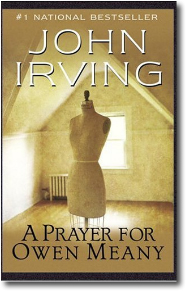
I've spent the better part of the last few weeks plowing through John Irving's "A Prayer for Owen Meany". "The World According to Garp" is one of my favorite books so I had high expectations for this one. I absolutely loved it and found it very hard to put it down - Irving has this great way of traveling through decades of stories and winding them together without losing focus on what he's trying to tell the reader. And as the back cover warned me, the character of Owen Meany was absolutely heart warming and heartbreaking. This book caught my attention at the most appropriate time in my life and I am so very glad that I read it. And just like "Garp", I immediately want to read it again for anything I might have missed.

Next up: "Good In Bed" by Jennifer Weiner. It seems that I've been reading nothing but stories relating to wartime communities, of boys becoming men at the loss of something very important. To give my mind a break (and slowly but surely return my growing stack of borrowed books), I'm making a one-day read of this book. It's a story of a girl coming to terms with her own fatness - which is difficult to read at points because it is somewhat poorly written, and as a fat girl myself, causes me to feel unnaturally guilty and worried that I actually sound and act like this character. I may not finish it, but it'll keep me somewhat entertained for this rainy day.
Saturday, February 28, 2009
TRUE TILL DEATH

I finished The World According to Garp in two days, which is pretty good considering it is 600 pages. There are a couple of literary elements that are really intruiging about this book. For starters the book covers a tremendous amount of years with a clarity and depth that I have only seen in masterpieces like 100 Years of Solitude and War and Peace so go John Irving. The second was the story within the story element; Garp is a writer and the book contains both a short story he writes and the opening chapter to his final work (40 pages!). The actual content of the novel is very moving, and I found parts very relevant to my life, which made me think that the way Garp works is by playing on the universality of sadness and triumph.
next up is Love In The Time of Cholera
Wednesday, February 18, 2009
A picture of all the books I have read since I last "rapped at ya"


Rebecca had questionable (at best) politics, but for a novel that is essentially a mystery novel it is really well executed. I would recommend it to anyone who is interested in reading Jane Eyre but doesn't want to deal language that is as dated.
The Heart of Whiteness is a book I really wanted to read for a while, for the following reasons
1) it is a discussion of dealing with white on other racism from a white person's view and 2)the title is a reference to a great, (albeit again questionable politically) novella. It did not disapoint, as it really attacked the question of what someone can do, knowing they are engaged in a system that benefits them solely because of skin color
Coraline is a book that interested me because I loved Gaiman's story telling techniques in Sandman and wanted to see how he could carry that out over the course of a novel. He did a great job and the book is really cute and also engaging. Coraline as a character is a perfect role model for anyone who is a) creative and b)oppressed in some manner. If I had a daughter I would read this book to her everyday, because it is not often a heroine makes it through a book without falling in love or needing the help of a man! She is like Kelly Clarkson, Ms. Independent!
The Kindly Ones and The Wake are the closing two graphic novels in the Sandman series and they are a perfect finale. The Kindly Ones is more action packed, while at the same time increasingly more philosophical about death. It is mind blowing to see loose ends from the first eight TPB brought back into this one and tied together. GO NEIL! The Wake had me in tears. Gaiman is honestly the best storytelling comic book writer, to the point where the line between Graphic Novel and Novel appears blurred. I have never read a series as cohesive and moving as this one, where even changes in art style are reflective in changes in content. FUCK, I hate the empty feeling when you finish something you love and know it won't go any further. No comic has given me that feeling as deeply as this did, and I will reread it to explore the themes deeper.
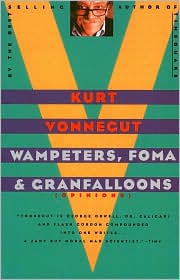
Wampeters, Foma & Granfalloons (Opinions) by Vonnegut was, as all his works are an interesting read. Since so much of his personal philosophy is distilled into his fiction, I found it a bit odd to get it so straightforwardly, but then again Vonnegut is always a little "to-the-point" without being straightforward. The best essay in here was the one about science fiction, because as someone who writes in worlds with machines, but who doesn't write sci-fi, I feel his pain/weirdness at his works being called sci-fi.
I am finally going to read The World According to Garp this week. Get psyched!
Monday, February 9, 2009
Book #3 - "The Time Machine Did it" - John Swartzwelder

130 pages, large text, and easily one of the funniest things I've ever read. A fictional story written by the author of "59 episodes of the Simpsons". I took it to work and read it during a slow shift. I found the humor similar to that in "I am America and so Can You", and, of course, to that of earlier Simpsons episodes. Definitely would recommend for a quick, amusing read.
Already started reading a second novel of his. "How I Conquered Your Planet". From what I've seen, he has 5 books, all involving the same dim witted detective, Frank Burly. I find myself less interested in the plots themselves, and more concernced with the next joke, which there are plenty of. Half way through this, will probably finish today.

Saturday, February 7, 2009
Books 5 &6

I'm still reading "Acid Dreams", but continuing my somewhat bad habit of reading more than one book at a time. I just finished "Ham on Rye", swearing off my promise to never read another Bukowski novel. Reading him makes me feel dirty, but strangely attracted to him as a person. This story is kind of what I wanted to see happen to Holden Caulfield. Someone enveloped by their own self-hatred, not afraid to admit that their shitty parents turned them into a shitty human being without ever actually saying the words. Bukowski's simple language and snarky descriptions of everything are humbling and it's no surprise to me that I love this kind of fiction. The kind that doesn't require you to think, to process, the story, but instead leads you into thinking and processing your own story. Or maybe just me.
 Next will be "A Seperate Peace" by John Knowles. A very good friend of mine sat down together putting back a few beers while watching the Superbowl and got into it about our tastes in literature. After arguing about the Beats and the "Lost Generation" we decided to trade book collections and see where each other are really at. He majored in French Lit in college which blows my mind because I find pretty much everything outside of 20th century American Lit to be boring out of context. Lucky for me everything he lent me is 20th century American Lit and I don't have to force myself through books like I did in high school. I haven't yet cracked the spine of "A Seperate Peace", but after reading the back cover I think I'll enjoy it, whatever it may be about.
3,4,5, etc
I guess I am going to start mixing school and pleasure books, sue me. Luc is doing it too!
I finished Naked Lunch by Burroughs a little while ago, it was very interesting to say the least. At first (and throughout most of it) I was really confused as to what was going on. He makes up a lot of words, and uses a ton of words that I do not know because I don't know a lot about drug culture. Reading the book front to back may not even be the best strategy since the entire book is made up of little segments of scenes and he doesn't tell you when the scenes change. You could pick it up at any point in the book and understand it just as much as someone who has been reading it from the beginning. I definitely want to read it again in the future after I read some criticism on it.
I also finished Less Than Zero by Bret Easton Ellis. My mom and I agree that Ellis is the most boring writer ever and he maybe used 5 adjectives throughout the entire book. I have concluded that I am NOT a fan of minimalist writing. It is so empty, I felt no attachment to any of the characters, and I could not engage myself at all. The book is about a rich college freshman home in LA from school for the first time. His friend's parents are all movie stars, and they all lead that glitzy cocaine and drugs filled lifestyle. One could say that Ellis' writing style is purposely empty to portray the emptiness of the rich lifestyle, but I think that is a total cop out. The book just went on and on with a feeling of boringness. It reminded me of The Perks of Being a Wallflower but more grown up with less puberty. That said, I want to read American Psycho in hopes that it is better.
Have also read Descartes' Discourse/Meditations and Hobbes' Leviathan but I don't think anyone wants me to ramble on about Philosophy. I'm also slowly reading the Bible and The Art of Biblical Narrative for one of my classes.
Up next for novels is Infinite Jest by David Foster Wallace. I think this will be the longest book I have read in my life so far at over 1,000 pages. I'm also slowly getting through One Hundred Years of Solitude. I wish I could just read it all the way through but I don't have the time.
I finished Naked Lunch by Burroughs a little while ago, it was very interesting to say the least. At first (and throughout most of it) I was really confused as to what was going on. He makes up a lot of words, and uses a ton of words that I do not know because I don't know a lot about drug culture. Reading the book front to back may not even be the best strategy since the entire book is made up of little segments of scenes and he doesn't tell you when the scenes change. You could pick it up at any point in the book and understand it just as much as someone who has been reading it from the beginning. I
definitely want to read it again in the future after I read some criticism on it.I also finished Less Than Zero by Bret Easton Ellis. My mom and I agree that Ellis is the most boring writer ever and he maybe used 5 adjectives throughout the entire book. I have concluded that I am NOT a fan of minimalist writing. It is so empty, I felt no attachment to any of the characters, and I could not engage myself at all. The book is about a rich college freshman home in LA from school for the first time. His friend's parents are all
movie stars, and they all lead that glitzy cocaine and drugs filled lifestyle. One could say that Ellis' writing style is purposely empty to portray the emptiness of the rich lifestyle, but I think that is a total cop out. The book just went on and on with a feeling of boringness. It reminded me of The Perks of Being a Wallflower but more grown up with less puberty. That said, I want to read American Psycho in hopes that it is better.Have also read Descartes' Discourse/Meditations and Hobbes' Leviathan but I don't think anyone wants me to ramble on about Philosophy. I'm also slowly reading the Bible and The Art of Biblical Narrative for one of my classes.
Up next for novels is Infinite Jest by David Foster Wallace. I think this will be the longest book I have read in my life so far at over 1,000 pages. I'm also slowly getting through One Hundred Years of Solitude. I wish I could just read it all the way through but I don't have the time.
Books 4, 5, 6, 7


Finished Persepolis about a week or two ago. Really enjoyed it, moreso than the movie which I saw prior to reading the book. The book explains the series of events FAR more than the movie. I didn't like the movie as much because it left me very confused as to why things were happening. Ohwell. I started and finished Galapagos, which was wonderful. Wholly recommend, was similar to Cat's Cradle in some aspects. Not a perfect book, or a good Vonnegut work to start with, as he jumps around quite a bit before beginning to tie anything together. However, it has all the most wonderful aspects of any Vonnegut novel (human race destruction/human beings sucking in general for the most part). At this point I have read 9/14 Vonnegut novels! I also have read The Little Prince about 3
 times this year, so I figure I can count that at least once towards the total! Was told about The Little Prince years and years ago but I never picked up a copy until this year. Great book, very quick to read also. I should hope that everyone has read this book already, but if not they should! I am still slowely reading The Decline of American Power, doing a chapter at a time every few days because it is SO dense. Scholarly author who must not have supposed that normal people would ever pick up his book. Today I will finally begin reading a book I have wanted to read for a while, but it was checked out of the library for an entire semester during the fall. It was available yesterday so woo! I got it. The Revolution Will Not Be Microwaved; Inside America's Underground Food Movements. I hope it rules.
Wednesday, February 4, 2009
3 and 4 - The Apprentice, and Brave New World

The Apprentice, by Tess Gerritsen, was on sale at Rite-Aid, so I bought it. It was a typical crime scene investigation, but the crime connected with the person leading the case. It was okay. 6/10.

Brave New World, by Aldous Huxley, on the otherhand, was a great, great read. Contrasting to 1984, it was a world where instead of being deprived of everything, everything was given out. No one felt pain, or stress, and a simple drug cured all other problems. Excellent, excellent read. It also reminded me of this Copper comic: here. I give it a 10/10, and if you haven't read it, please do so.
I'm not sure what I'm reading next, but I know I want to read Catch 22, Absalom, Absalom, reread The Scarlet Letter, and read a bunch of Hemingway; For Whom The Bell Tolls, A Farewell to Arms, and The Old Man and The Sea.
002, 003, 004
I had to abandon The Great Gatsby because my semester reading crept up on me. Last night I finally finished Bastard out of Carolina by Dorothy Allison, and ten minutes ago I finished Blood Meridian by Cormac McCarthy. I'm going to go start The Road now because I have to finish it by tonight.
Friday, January 30, 2009
{Lindsay} Books 5, 6, and 7 (plus 1)
So one good thing about being unemployed is I now have a lot more time to devote to my reading...as well as the bajillion other projects I have going on right now...
Dewey was a cute book. Chapters alternated between the life of a cat in a town library, the library and the surrounding community, and the author's life. This mix made for a very well-rounded story and a more interesting read.
Book 5 was The Humble Little Condom: A History. In case that title doesn't tell it a ll, it's a wide-sweeping history of condom production and use from the beginning of recorded history. I was expecting it to be really interesting, but the first half is kind of a snoozer. Since it covers such a vast span of time, the author has little time to devote to really significant, interesting details. Every few paragraphs are broken up into their own little sections, and there isn't a whole lot of cohesion between these different sections. The author says a lot, but doesn't end up explaining a lot, and I found myself wanting to know more about literally everything mentioned in this book.
Book 6 was He's a Stud, She's a Slut, and 49 Other Double Standards Every Woman S hould Know. This one was okay, I guess. None of the double standards presented were anything I (and I'm assuming most people) wasn't already aware of. The author provides some interesting and sometimes insightful commentary, and I definitely agreed with her on many things (for example, disdain over the idea that women can't pick up the check on a dinner date simply because they're women, and that's what the man is supposed to do), but there were times when I was annoyed at its overly feministness. I feel weird citing that as a criticism of the book, since I have nothing against feminism as a general concept, or feminists as people. I would definitely label myself one, if I was into labeling to begin with. I guess I just don't get the whole devoting-your-whole-being-to-focusing-on-the-fact-that-you're-a-strong-woman thing. Just BE one, ya know? I dunno, maybe I'm missing the point of the whole movement and am really some sort of sex/gender traitor by saying that. Whatever! It was a quick, entertaining read, and certainly validated my own personal feelings about women's roles in all sorts of contexts, so overall it made for good times.
I'm not counting it, since I started it last year, but I fiiiiiinally finished Crime. Oh Irvine Welsh that I knew and loved, where have you gone? The reason it t ook me so long to finish is because it's so goddamn BORING. The plot takes forever to get anywhere, and he writes a lot more scene description than dialogue in this one than in his other works. If it didn't have his name on the cover, I would have no idea that he was the one who wrote it. Not much phonetic Scots, no raunchy sex scenes, no characters that you get to know well enough to REALLY hate. Ugh. Such a letdown! One thing I did find interesting, though, was the fact that the entire book is written in the present tense as opposed to the usual past. Welsh even writes in the second person from time to time.
Next up for number 7: Just One Child: Science and Policy in Deng's China.
Dewey was a cute book. Chapters alternated between the life of a cat in a town library, the library and the surrounding community, and the author's life. This mix made for a very well-rounded story and a more interesting read.
Book 5 was The Humble Little Condom: A History. In case that title doesn't tell it a
 ll, it's a wide-sweeping history of condom production and use from the beginning of recorded history. I was expecting it to be really interesting, but the first half is kind of a snoozer. Since it covers such a vast span of time, the author has little time to devote to really significant, interesting details. Every few paragraphs are broken up into their own little sections, and there isn't a whole lot of cohesion between these different sections. The author says a lot, but doesn't end up explaining a lot, and I found myself wanting to know more about literally everything mentioned in this book.
Book 6 was He's a Stud, She's a Slut, and 49 Other Double Standards Every Woman S
 hould Know. This one was okay, I guess. None of the double standards presented were anything I (and I'm assuming most people) wasn't already aware of. The author provides some interesting and sometimes insightful commentary, and I definitely agreed with her on many things (for example, disdain over the idea that women can't pick up the check on a dinner date simply because they're women, and that's what the man is supposed to do), but there were times when I was annoyed at its overly feministness. I feel weird citing that as a criticism of the book, since I have nothing against feminism as a general concept, or feminists as people. I would definitely label myself one, if I was into labeling to begin with. I guess I just don't get the whole devoting-your-whole-being-to-focusing-on-the-fact-that-you're-a-strong-woman thing. Just BE one, ya know? I dunno, maybe I'm missing the point of the whole movement and am really some sort of sex/gender traitor by saying that. Whatever! It was a quick, entertaining read, and certainly validated my own personal feelings about women's roles in all sorts of contexts, so overall it made for good times.
I'm not counting it, since I started it last year, but I fiiiiiinally finished Crime. Oh Irvine Welsh that I knew and loved, where have you gone? The reason it t
 ook me so long to finish is because it's so goddamn BORING. The plot takes forever to get anywhere, and he writes a lot more scene description than dialogue in this one than in his other works. If it didn't have his name on the cover, I would have no idea that he was the one who wrote it. Not much phonetic Scots, no raunchy sex scenes, no characters that you get to know well enough to REALLY hate. Ugh. Such a letdown! One thing I did find interesting, though, was the fact that the entire book is written in the present tense as opposed to the usual past. Welsh even writes in the second person from time to time.
Next up for number 7: Just One Child: Science and Policy in Deng's China.
Wednesday, January 28, 2009
"Love is a Mix Tape"

My friend recommended this book to me, but only described it as a book where someone "makes mix tapes for everything he does". Hindsight, I'm surprised I picked it up. It's a biography / autobiography written by one of the editors at Rolling Stone Magazine, speaking about different mix tapes he'd made for almost every occasion of his life, spanning from High School dances, to washing the dishes, to meeting the love of his life. Over the course of book he meets the girl of his dreams, gets married, has her die in his arms, and goes on to tell about his life afterward. I identified with so many parts of the story, especially with his grieving process after losing my own boyfriend years ago. It took me right back to the point where I was told he had passed away, and the on coming months that followed. Sheffield speaks to openly and honestly, sharing vulnerable secrets with the reader, that you can't help sympathizing with him. While the story had it's share of despair and loneliness, it maintained a steady humorous tone that made even the saddest of times comical. I finished the 225 page book in under 2 days, and was left feeling grateful for the little time I did have with all of my friends, boyfriend, father, and relatives that I have lost.
Tuesday, January 27, 2009
Books 4+5+6
I finished Nausea, and then I reread Nausea during a long bath, and then I thought about doing it again. Jean Paul Sartre has a way of capturing the existentialist moments of Doestyevsky and inflating them to new heights. I would say in terms of style there is more than just an echo of Notes From Underground in it, which is fine by me given that I loved Notes.
On Monday I tackled Umberto Eco's The Name of The Rose

It was sort of a thriller/murder mystery set in the 1300's in a monestary. It ruled! I had originally tried to read it at some point in November and failed, because the Pilfers played their music too loudly for me to concentrate.
The main characters, a Friar and his apprentice are always engaged in deductive reasoning, and it makes the whole thing seem like Encyclopedia Brown for adults, but I found it engaging. It wasn't Nausea, but for a 400 page book it read swiftly.
Next up is some more Sandman! I am almost done with all of them! AHHHH (real monsters)
On Monday I tackled Umberto Eco's The Name of The Rose
It was sort of a thriller/murder mystery set in the 1300's in a monestary. It ruled! I had originally tried to read it at some point in November and failed, because the Pilfers played their music too loudly for me to concentrate.
The main characters, a Friar and his apprentice are always engaged in deductive reasoning, and it makes the whole thing seem like Encyclopedia Brown for adults, but I found it engaging. It wasn't Nausea, but for a 400 page book it read swiftly.
Next up is some more Sandman! I am almost done with all of them! AHHHH (real monsters)
Four Words....

"White Whale! Holy Grail!"
-"Blood and Thunder" by MastodonSo I'm supposed to be reading Survivor: A Novel by Chuck Palahniuk, but I've just been listening to way too much of Mastodon's Leviathan lately. I'm going to have to but Chuck on the back-burner for a while and pick up Moby Dick (or The Whale) by Herman Melville. I am so excited! And it's the special leather-bound edition, too. (Not vegan, I know, but my grandparents got it for me as a 13th birthday present.)
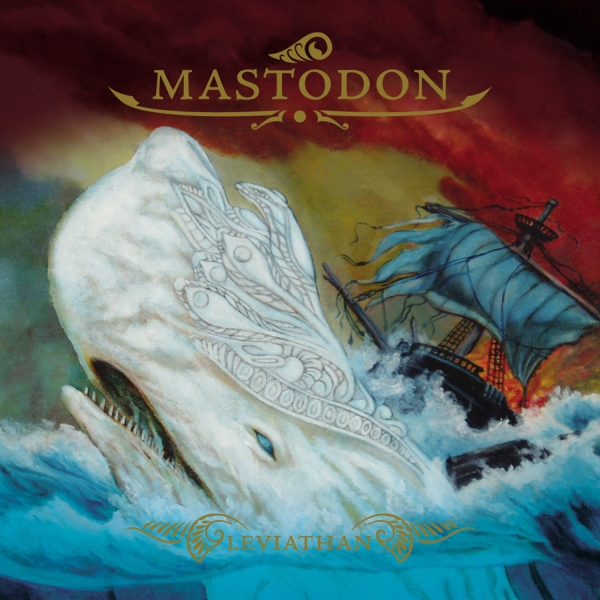
Also, if you haven't heard of Mastodon or their album Leviathan, check out this link and give it a listen!! It's a whole album about Moby Dick!!
-Greg Thornberg
Saturday, January 24, 2009
The Alphabet of Manliness

I mentioned this already on the CTska board, but I recently finished Maddox "The Alphabet of Manliness". Overall, it was a amusing book with quick, easy chapters which were perfect for me to skim through during my slow shifts at work. The majority of the book follows the same sadistic humor Maddox is famous for on his website, which attracted me in the first place. However, I can't overlook the fact that there were huge parts that lacked substance and seemed forced, as though to "fill letters" to complete the alphabet. The "Z" chapter on Zombies in particular was horribly boring. Overall, I'd recommend the book as something to keep in a magazine rack in someone's bathroom.
Subscribe to:
Posts (Atom)