
I really enjoyed this book, some stories in it more than others. The first story, "Love is a thing on sale for more money than there exists" which I feel is the best story, I read one time on Tao Lin's blog and prompted me to get this book. All of Lin's stories are about normal people doing normal things that are not necessarily exciting or heart-wrenching or warming out of the context in which he writes them. Each of the stories are different and about different people in different parts of the country and in different stages of their lives, but they are all restless and lonely or depressed in some way despite being potentially surrounded by other people or success or engaged to be married. Modern life is depressing. He reminds me of Bret Easton Ellis but I like this better, it all feels like thoughts that I might have orchestrated during a midtwenties crisis.
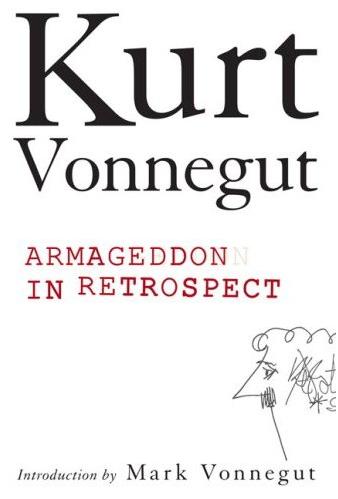 Book Two: Armageddon in Retrospect by Kurt Vonnegut. I didn't really enjoy this book as much as I thought that I would. All of the stories in this book are about his war experiences, or inspired by them. However the best part of this book is a speech that Kurt wrote but was unable to present because he died prior to the presentation and his son gave it instead to a huge audience full of his adoring fans. It pleased me very much and I read it over and over in between reading the other stories. Ugh, it was so good! There was this really good story about what foods the soldiers would eat when they finally came back home from war, but no others really stuck out to me that much.
Book Three: In Defense of Food: An Eater's Manifesto by Michael Pollan. I haven't read any of Pollan's other books, but I get the feeling that a lot of his books have repeated knowledge, much like reading The Food Revolution by John Robbins and also The Ethics of What We Eat by Peter Singer, and also The Revolution Will Not Be Microwaved by... oh I can't remember, but reading all these books involved a lot of overlapping, even though I read them over the course of about 5 years, there wasn't too much new knowledge within them. I was really surprised by this book, because there was a lot of stuff I haven't read anywhere before, such as the confusion between real and fake foods, "low fat" and "low carb" foods and how they're not really real foods at all, mostly fillers. In the last chapter, Pollan offered a set of guidelines for people to follow in order to eat the most real food possible in a grocery story full of imitations. Some of the guidelines he provides: "Avoid any food that makes a health claim, it's probably not a real food if it does." "You are what you eat eats too." "Don't get your fuel from the same place you car does." "Avoid anything that can't rot, anything you can't pronounce." But right, I was really pleased by this book, it was even better to be able to discuss the book with my friend who read The Omnivore's Dilemma, also by Pollan.

No comments:
Post a Comment