Since I'm extremely far behind on my blogging, I'm just gonna do a list post with a few short comments to catch up:
Twilight by Stephenie Meyer
I really hate this series, and the movie franchise, and the fangirls, but for some reason I felt the need to re-read this one. You can find plenty of blog and LJ posts about how terrible the writing is, and how it's chock full of Mormon ideals, so I don't feel bad about not going into it here.
How to Read a Book by Mortimer J. Adler
I think my expectations of this book were way too high, so I don't know how much I really enjoyed this one. The first half of the book talks about different levels of reading, and the second half discusses different ways to read texts in different academic fields. I consider myself a fairly good reader, so I didn't really get much out of it for myself, but as the book itself suggested, it's a good organizing tool for a course on academic reading.
The Letters of J.R.R. Tolkien by J.R.R. Tolkien
I don't think I can relay just how much I loved reading this. A lot of information about the characters, themes, and linguistic elements in his writing, as well as a nice glimpse into his role as father, husband, and professor. As a more-than-casual fan of Tolkien, I found this book to be extremely insightful, and can't believe it took me this long to finally read it.
The Read-Aloud Handbook by Jim Trelease
Please, if you have kids, read aloud to them. This book shows the lifelong benefits of out loud and silent reading, and cutting down on television. Good readers = brighter students. Start 'em young!
Teaching Adult Second Language Learners by Heather McKay and Abigail Tom
This book is a great teaching resource. Tons of lesson plans organized by themes such as family, food, housing, health, and work. Definitely more oriented toward survival English than academic, which is good for me since I've worked more in the latter than the former. Gives me some nice ideas.
Charlotte's Web and Stuart Little by E.B. White
I've always loved CW, but was considerably less impressed with SL. It just . . . ends. Kind of a letdown.
Wayside School series by Louis Sachar
Sideways Stories from Wayside School
Wayside School is Falling Down
Wayside School Get a Little Stranger
The Enchanted Forest Chronicles by Patricia C. Wrede
Dealing With Dragons
Searching For Dragons
Calling On Dragons
Talking to Dragons
Saturday, March 27, 2010

Tuesday, February 16, 2010
[Lindsay 23] John the Painter: Terrorist of the American Revolution by Jessica Warner
 I had never even heard of John the Painter when I first encountered this book, so between that and my general interest in American Revolutionary history, it seemed like a worthwhile purchase. (Plus I got it half price at one of those warehouse/bargain bookstores.) James Aitken, a.k.a. John the Painter, isn't one of the more notable figures of Revolutionary history, and not much has been written about him. He was a Scot sympathetic to the American cause during the Revolution who attempted to cripple the British navy by burning down five major dockyards across England. Ultimately, he failed in this venture, and was captured and sentenced to hanging. Despite his unremarkableness, I found myself fascinated by his story and Warner's commentary on it.
I really appreciate the way Warner pieces this book together. There aren't many written sources on Aitken other than his court testimony and records of his last days before being hanged, so she had to be creative in order to give a fuller account of his whole life. The book covers Aitken's birth to his death, but his childhood in particular isn't terribly well documented. Warner uses accounts written by other people not necessarily tied to Aitken at all to describe his early life, from the conditions of his home, to his time at school, to the more general experience of growing up in Edinburgh at the time. Warner is careful, however, to make it very clear when she is relaying first-hand documentation versus this second-hand piecing, and because of that it makes it easier to just roll with it and enjoy the narrative.
Sunday, February 14, 2010
[Lindsay 20-22] Winnie-the-Pooh by A.A. Milne
I'm not quite sure what to say about this classic collection of stories about a bear and his friends, other than I love love love it. Here we first meet Pooh as he tries to trick some bees into thinking he is a rain cloud so that he may steal some of their honey, then as he gets himself stuck in Rabbit's hole, and as he hunts for the Woozle with Piglet. Eeyore celebrates a birthday and loses his tail, Kanga and Roo come to the 100 Acre Wood, and Christopher Robin is always around to get everyone out of trouble.
Milne wrote these stories based on his own son, Christopher Robin, and the toys that he played with. I wonder if the stories are based on real games Christopher Robin played with his stuffed animals, or if Milne wrote them for the sake of something different for his son to be entertained by. Either way, it's impossible not to appreciate this book for the way that it captures the innocence, imagination, and ingenuity of childhood. The characters are all a little childlike in their own ways (even wise old Owl and grumpy-but-hilarious Eeyore), and the Wood itself is a physical representation of childhood. Milne's writing is very sophisticated, however, so even though it's targeted for young readers, the richness and subtleties of the book's language make reading it as an adult just as enjoyable as reading it as a kid (though I say that somewhat hypothetically, having only read this one as an adult).
The House At Pooh Corner, however, I have been reading since I was ten. I can't remember if that was before or after I participated in the Winnie-the-Pooh play with Oddfellows, so I don't know if I joined the play because of the book or bought the book because of the play. Regardless, I've always loved it, and even though it's the second book in the collection, the stories within it stand fine on their own. Here, Eeyore and Owl get new houses, Tigger comes to the Wood, Piglet discovers he is useful after all, and everyone plays Poohsticks.
These are the only two books of stories about Pooh and his friends. Milne also wrote a book of children's poet ry and a book of Pooh-centered poetry, neither of which I've read. I don't know if it's because he just ran out of stories to tell, or if what was happening in House At Pooh Corner was mirroring what was happening in real life: Christopher Robin was growing up and leaving behind his toys. A whole story is devoted to the animals in the Wood trying to figure out where Christopher Robin goes in the morning, and it is discovered that he has started going to school. In the final story, all the animals throw Christopher Robin a going-away party, and there is a real sense of finality with these proceedings. The ending is quite sad in its inevitability of the future: that even though Christopher Robin will sometimes be able to visit the Wood, eventually he will grow up enough that he will stop coming for good. There is a conveyance of hope that Christopher Robin will, at least, always remember Pooh no matter what, and even in his old age he will still understand and appreciate the imagination of his childhood and the friendships with his toys.
Finally, just because Ben had a copy on his bookshelf, I read The Tao of Pooh by Benjami n Hoff. I really didn't have any expectations, good or bad, about this book, but in the end it really didn't make much of an impression on me. The title really says it all; Hoff links the ancient philosophy of Taoism to Milne's characters. It's a decent concept, but Hoff's execution is a little awkward. The bits about Taoism are interesting and, on the surface, applicable to the Poohverse, but he illustrates his points with excerpts from Milne's stories that are way. too. long. I really felt that all his Pooh quotations could have been paragraphs shorter, and more infused with analysis rather than mere summary. Further, Hoff doesn't always seem to fully explain what his Pooh quotes really mean to him or why he's tying them to Taoism, so he doesn't always do a very good job of explicitly linking the two. It's not that the ideas he presents are all that complex or difficult to comprehend, but sometimes he doesn't always make it clear why he includes the quotes that he does. Overall, the book didn't really give me any new insights into the world of Pooh, but it did help me begin to learn a little about Taoism.
Milne wrote these stories based on his own son, Christopher Robin, and the toys that he
 played with. I wonder if the stories are based on real games Christopher Robin played with his stuffed animals, or if Milne wrote them for the sake of something different for his son to be entertained by. Either way, it's impossible not to appreciate this book for the way that it captures the innocence, imagination, and ingenuity of childhood. The characters are all a little childlike in their own ways (even wise old Owl and grumpy-but-hilarious Eeyore), and the Wood itself is a physical representation of childhood. Milne's writing is very sophisticated, however, so even though it's targeted for young readers, the richness and subtleties of the book's language make reading it as an adult just as enjoyable as reading it as a kid (though I say that somewhat hypothetically, having only read this one as an adult).
The House At Pooh Corner, however, I have been reading since I was ten. I can't remember if that was before or after I participated in the Winnie-the-Pooh play with Oddfellows, so I don't know if I joined the play because of the book or bought the book because of the play. Regardless, I've always loved it, and even though it's the second book in the collection, the stories within it stand fine on their own. Here, Eeyore and Owl get new houses, Tigger comes to the Wood, Piglet discovers he is useful after all, and everyone plays Poohsticks.
These are the only two books of stories about Pooh and his friends. Milne also wrote a book of children's poet
 ry and a book of Pooh-centered poetry, neither of which I've read. I don't know if it's because he just ran out of stories to tell, or if what was happening in House At Pooh Corner was mirroring what was happening in real life: Christopher Robin was growing up and leaving behind his toys. A whole story is devoted to the animals in the Wood trying to figure out where Christopher Robin goes in the morning, and it is discovered that he has started going to school. In the final story, all the animals throw Christopher Robin a going-away party, and there is a real sense of finality with these proceedings. The ending is quite sad in its inevitability of the future: that even though Christopher Robin will sometimes be able to visit the Wood, eventually he will grow up enough that he will stop coming for good. There is a conveyance of hope that Christopher Robin will, at least, always remember Pooh no matter what, and even in his old age he will still understand and appreciate the imagination of his childhood and the friendships with his toys.
Finally, just because Ben had a copy on his bookshelf, I read The Tao of Pooh by Benjami
 n Hoff. I really didn't have any expectations, good or bad, about this book, but in the end it really didn't make much of an impression on me. The title really says it all; Hoff links the ancient philosophy of Taoism to Milne's characters. It's a decent concept, but Hoff's execution is a little awkward. The bits about Taoism are interesting and, on the surface, applicable to the Poohverse, but he illustrates his points with excerpts from Milne's stories that are way. too. long. I really felt that all his Pooh quotations could have been paragraphs shorter, and more infused with analysis rather than mere summary. Further, Hoff doesn't always seem to fully explain what his Pooh quotes really mean to him or why he's tying them to Taoism, so he doesn't always do a very good job of explicitly linking the two. It's not that the ideas he presents are all that complex or difficult to comprehend, but sometimes he doesn't always make it clear why he includes the quotes that he does. Overall, the book didn't really give me any new insights into the world of Pooh, but it did help me begin to learn a little about Taoism.
Wednesday, February 10, 2010
[Lindsay 15-19] More Darkover by Marion Zimmer Bradley and others
I recently came across a newer Darkover novel at Borders, so I decided to read it and re-read a few others (though I don't think I'll be reading more anytime soon).
First was Darkover Landfall, which I mentioned in my first entry for the year. It's the o rigin story of human life on Darkover, and is about a crashed spaceship that had been on its way to colonize a new planet but ended up somewhere wholly unexpected. The book tracks a few main characters as they deal with injuries and deaths of fellow passengers resulting from the crash, establishing their location on the planet and in the galaxy, encounters with the native species of the planet, and the mysterious Ghost Winds that drive everyone into a sexual frenzy. Plotwise, it's not terribly expansive, and the book is short at only 160 pages. It's primarily a story about survival on a completely unknown, uncharted planet, and the two major conflicts are human vs. wild and human vs. human (primarily in their divisiveness over whether to accept their fate and just settle where they are, or to hold on to the hope that they will at some point, in another generation or two, be able to repair their ship and get off the planet).
While it's chronologically the starting point of the series, it's not a good place to start reading the series. I think it's better to already have an understanding of the names, customs, and places that are common to the rest of the books, because they're easy to spot in Darkover Landfall. I don't know that the plot and scope of DL on its own is enough to keep a potential new reader interested in the series, though. The events between this book and the next are separated by a millenium, so there's nothing overly blatant that connects them. I almost wish Bradley had made DL a little longer and tracked the progress of the planet at every few hundred years or so, or had just written more books that took place between the founding and the Ages of Chaos. Even as it is, the book is adequate in its role as a sort of history of the beginning of the human presence on the planet, and the beginning of many of the cultural and linguistic practices that are displayed in later books.
Exile's Song was the first Darkover novel I ever read after my dad bought it for me in middle school. He himself had read some of the books when he was younger and was a fan. The book is about Margaret Alton, daughter of Lew Alton, himself a Darkovan representative on the Terran Senate. Margaret is a University scholar who studies folk music, and she is sent to Darkover to collect samples of the planet's songs. Lew had taken Margaret off the planet when she was five or six so he could serve on the Senate, and didn't pass on any knowledge to Margaret about the planet of her birth. Much of the novel deals with Margaret (Marguerida) battling with a strange force that has overshadowed her mind since childhood, learning to deal with her late onset of laran, and coming to terms with being a part of Darkovan nobility and a patriarchal society that has little patience with independent, strong-willed women such as herself. Overall, it's primarily a story of psychological growth on Marguerida's part.
The Shadow Matrix is the sequel to Exile's Song, and has two very distinct parts. In the first half, which has a pervading feel of a mystery story, the focus is on Mikhail Lanart-Hastur, Marguerida's cousin and love interest. (Yeeeeah, there's a lot of incest of this nature on Darkover.) Mikhail is sent to the house of the Elhalyns, the Darkovan line of kingship, in order to designate an heir to the throne of the planet. While there, he must try to take care of the five children and the grounds, all of which are severely neglected, and embark on a battle of wills against a powerful telepath living in the house and assisting the children's mother. This part ends in a bit of a showdown, resulting in Mikhail bringing the children back to the main city with him. In the second half, Mikhail and Marguerida are summoned into the past, where they meet a powerful and legendary telepath named Varzil the Good. Their encounter with him has a profound impact on their own lives, the nature and strength of their laran, and the safety of the whole planet.
Both Exiles Song and The Shadow Matrix were ghost-written by Adrienne Martine-Barnes, and because of this I've never been able to really love them. Her writing is, to put it simply, annoying as all hell. Her dialogue is even more stilted than Bradley's, and everyone sounds way too light-hearted. As a result, I neither want to take any of them seriously as realistic characters, or care enough about them to feel any sense of impending doom when they are in dangerous situations. Barnes writes caricatures, not characters, and I hate them all.
Barnes' other problem is that she writes way too much. Both Exile's Song and The Shadow Matrix could easily be hundreds of pages shorter, but Barnes insists on including overly long scenes with pointless description and unnecessary conversations. It would be fine if these things added something to the core conflicts, but they don't. Fluff with a capital F. Annoyingly written fluff, at that.
I skipped Traitor's Sun, the sequel to The Shadow Matrix, because I couldn't deal with any more Barne s Darkover. I went on to The Alton Gift, one of the newest books, sequel to Traitor's Sun and written by Deborah Ross. It's about Domenic Alton-Hastur, the 20-year-old son of Marguerida and Mikhail, as he comes into his own as the heir to the Darkovan throne. Also featured is Lew Alton, Marguerida's father, as he comes to terms with an event from his past in which he used his laran to cause forcible memory loss to a group of Terran assassins (this itself happened in Traitor's Sun). All the while, the entire Darkovan population battles a breakout of Trailmen's Fever, a deadly disease they are once again susceptible to now that the Terran Federation has left the planet, and taken with them their medical know-how.
Though this book is the same length as the ones Barnes wrote, Ross' use of its space is much better than Barnes'. Ross writing is much closer in tone and style to Bradley's (though obviously unique at the same time), and she has a much better sense than Barnes when to really flesh out a scene and when to simply mention it in passing for the sake of pushing through the story. As a result, Ross' Darkover is much grander, with a number of important characters getting the limelight, as opposed to Barnes' one or two. Ross does have some awkward character development moments throughout the book, but on the whole I much more enjoy her writing. She's written a few other books since Bradley died, and at some point I will definitely read those.
I also read Sharra's Exile, which features Lew Alton, Marguerida's father, when he is still in his twenties and dealing with his involvement in the Sharra Rebellion. The book is a sequel to Heritage of Hastur, probably my favorite Darkover book, which details the events of this rebellion. It was actually the first Darkover novel Bradley ever wrote, originally titled Sword of Aldones. That book is much shorter, and she eventually expanded and rewrote it into Sharra's Exile after she had matured as a writer. If I end up reading Heritage of Hastur again this year, I'll be sure to do a plot summary for Sharra's Exile at that time, cause it's hard to explain one without the other. I'm definitely gonna take a break from Darkover for a bit, though. There are quite a few books in the series, and some of them group together quite nicely in terms of chronology and recurring characters. Maybe over the summer I will read another thread.
First was Darkover Landfall, which I mentioned in my first entry for the year. It's the o
 rigin story of human life on Darkover, and is about a crashed spaceship that had been on its way to colonize a new planet but ended up somewhere wholly unexpected. The book tracks a few main characters as they deal with injuries and deaths of fellow passengers resulting from the crash, establishing their location on the planet and in the galaxy, encounters with the native species of the planet, and the mysterious Ghost Winds that drive everyone into a sexual frenzy. Plotwise, it's not terribly expansive, and the book is short at only 160 pages. It's primarily a story about survival on a completely unknown, uncharted planet, and the two major conflicts are human vs. wild and human vs. human (primarily in their divisiveness over whether to accept their fate and just settle where they are, or to hold on to the hope that they will at some point, in another generation or two, be able to repair their ship and get off the planet).
While it's chronologically the starting point of the series, it's not a good place to start reading the series. I think it's better to already have an understanding of the names, customs, and places that are common to the rest of the books, because they're easy to spot in Darkover Landfall. I don't know that the plot and scope of DL on its own is enough to keep a potential new reader interested in the series, though. The events between this book and the next are separated by a millenium, so there's nothing overly blatant that connects them. I almost wish Bradley had made DL a little longer and tracked the progress of the planet at every few hundred years or so, or had just written more books that took place between the founding and the Ages of Chaos. Even as it is, the book is adequate in its role as a sort of history of the beginning of the human presence on the planet, and the beginning of many of the cultural and linguistic practices that are displayed in later books.
Exile's Song was the first Darkover novel I ever read after my dad bought it for me in middle school. He
 himself had read some of the books when he was younger and was a fan. The book is about Margaret Alton, daughter of Lew Alton, himself a Darkovan representative on the Terran Senate. Margaret is a University scholar who studies folk music, and she is sent to Darkover to collect samples of the planet's songs. Lew had taken Margaret off the planet when she was five or six so he could serve on the Senate, and didn't pass on any knowledge to Margaret about the planet of her birth. Much of the novel deals with Margaret (Marguerida) battling with a strange force that has overshadowed her mind since childhood, learning to deal with her late onset of laran, and coming to terms with being a part of Darkovan nobility and a patriarchal society that has little patience with independent, strong-willed women such as herself. Overall, it's primarily a story of psychological growth on Marguerida's part.
The Shadow Matrix is the sequel to Exile's Song, and has two very distinct parts. In
 the first half, which has a pervading feel of a mystery story, the focus is on Mikhail Lanart-Hastur, Marguerida's cousin and love interest. (Yeeeeah, there's a lot of incest of this nature on Darkover.) Mikhail is sent to the house of the Elhalyns, the Darkovan line of kingship, in order to designate an heir to the throne of the planet. While there, he must try to take care of the five children and the grounds, all of which are severely neglected, and embark on a battle of wills against a powerful telepath living in the house and assisting the children's mother. This part ends in a bit of a showdown, resulting in Mikhail bringing the children back to the main city with him. In the second half, Mikhail and Marguerida are summoned into the past, where they meet a powerful and legendary telepath named Varzil the Good. Their encounter with him has a profound impact on their own lives, the nature and strength of their laran, and the safety of the whole planet.
Both Exiles Song and The Shadow Matrix were ghost-written by Adrienne Martine-Barnes, and because of this I've never been able to really love them. Her writing is, to put it simply, annoying as all hell. Her dialogue is even more stilted than Bradley's, and everyone sounds way too light-hearted. As a result, I neither want to take any of them seriously as realistic characters, or care enough about them to feel any sense of impending doom when they are in dangerous situations. Barnes writes caricatures, not characters, and I hate them all.
Barnes' other problem is that she writes way too much. Both Exile's Song and The Shadow Matrix could easily be hundreds of pages shorter, but Barnes insists on including overly long scenes with pointless description and unnecessary conversations. It would be fine if these things added something to the core conflicts, but they don't. Fluff with a capital F. Annoyingly written fluff, at that.
I skipped Traitor's Sun, the sequel to The Shadow Matrix, because I couldn't deal with any more Barne
 s Darkover. I went on to The Alton Gift, one of the newest books, sequel to Traitor's Sun and written by Deborah Ross. It's about Domenic Alton-Hastur, the 20-year-old son of Marguerida and Mikhail, as he comes into his own as the heir to the Darkovan throne. Also featured is Lew Alton, Marguerida's father, as he comes to terms with an event from his past in which he used his laran to cause forcible memory loss to a group of Terran assassins (this itself happened in Traitor's Sun). All the while, the entire Darkovan population battles a breakout of Trailmen's Fever, a deadly disease they are once again susceptible to now that the Terran Federation has left the planet, and taken with them their medical know-how.
Though this book is the same length as the ones Barnes wrote, Ross' use of its space is much better than Barnes'. Ross writing is much closer in tone and style to Bradley's (though obviously unique at the same time), and she has a much better sense than Barnes when to really flesh out a scene and when to simply mention it in passing for the sake of pushing through the story. As a result, Ross' Darkover is much grander, with a number of important characters getting the limelight, as opposed to Barnes' one or two. Ross does have some awkward character development moments throughout the book, but on the whole I much more enjoy her writing. She's written a few other books since Bradley died, and at some point I will definitely read those.
I also read Sharra's Exile, which features Lew Alton, Marguerida's father, when he is still in
 his twenties and dealing with his involvement in the Sharra Rebellion. The book is a sequel to Heritage of Hastur, probably my favorite Darkover book, which details the events of this rebellion. It was actually the first Darkover novel Bradley ever wrote, originally titled Sword of Aldones. That book is much shorter, and she eventually expanded and rewrote it into Sharra's Exile after she had matured as a writer. If I end up reading Heritage of Hastur again this year, I'll be sure to do a plot summary for Sharra's Exile at that time, cause it's hard to explain one without the other. I'm definitely gonna take a break from Darkover for a bit, though. There are quite a few books in the series, and some of them group together quite nicely in terms of chronology and recurring characters. Maybe over the summer I will read another thread.
Sunday, January 31, 2010
[Lindsay 10-14] Percy Jackson and the Olympians by Rick Riordan
This delightful series has fast become one of my favorites. Set in modern-day America, New York City resident Percy Jackson discovers at the age of 12 that he is the son of Poseidon, and from then on his life is never quite the same. Based around Greek mythology, the books tell the story of Percy and his friends from Camp Half-Blood (a summer camp for kids with a godly parent each), who must battle against Kronos, the god of time, and the other Titans who are plotting to overthrow the Olympian gods and destroy all of western civilization. Percy must also deal with the possibility that he may be the subject of a dooming prophecy . . .
In the first book, The Lightning Thief, Percy is thrust into the world of his godly half after h e is accused of stealing Zeus' great thunder bolt, and horrific creatures are sent to retrieve/kill him. Until that point, Percy had no idea about his true nature, but he quickly acclimates to life at Camp Half-Blood, where he meets other demi-god children with a variety of powers and skills. Also at camp is the mummified Oracle at Delphi, and after a visit to her, Percy and his friends Grover and Annabeth embark on a quest to the Underworld (the entrance to which is in Los Angeles) in an attempt to clear Percy's name and recover the lightning bolt. On the way, they battle various evil creatures, outwit some Olympian gods, and begin to untangle a greater threat than they had been anticipating.
Full of humor and clever spins on classical Greek mythology, this book was nearly impossible for me to put down. A great introduction to the series, with an intricate enough plot for it to stand on its own. It has been made into a movie and will be released on President's Day. I have every intention of going to see it, and am glad I got to read it first.
In Book 2, Th e Sea of Monsters, the magical borders of the camp are under threat when a particular pine tree is poisoned and begins to slowly die. The only way to save it, and the camp, is for some of the campers to travel to the Bermuda Triangle and retrieve the Golden Fleece from the island of the Cyclops. Clarisse, a daughter of Ares, is officially chosen, but of course Percy ends up lending a hand, and in the process learns more about his family and the greater plot against the Olympians.
I wasn't as impressed with this follow-up as I was with the first book. The humorous tone continues, but I feel like the action of the plot is too continuously intense. The pacing doesn't really work for me because there's barely a moment to breathe after the characters get themselves out of a violent mess; they immediately find themselves in another. The plot is less intricate than in the first book, and therefore less interesting to me. Still, it's a good book, and is a suitable bridge between parts one and three of the series.
Book 3, The Titan's Curse, takes place during the winter (unlike the others, which take place during the summer), and opens with Percy and Annabeth traveling to Maine to retrieve two newly-discovered half-bloods and bring them back to camp for training. Mayhem and violence ensue, of course, and before they are able to return to camp, Annabeth and the goddess Artemis both go missing. A team of campers and Artemis' Hunters set out of a rescue mission to San Francisco, the location of Kronos' and the other Titans' stronghold; Percy gets left out, but that doesn't stop him from tagging along to save Annabeth. New characters are introduced, the plot against the Olympians thickens, and things get a bit tragic for all involved in the rescue mission.
After the minor disappointment of Book 2, I was glad that this book brought the series back up a notch. The pacing is better, a lot of interesting new characters are brought in, and the quality of the writing is as good as ever. This is the first book in the series that I had a really strong emotional response to, and I see it as a real turning point in the tone and direction of the overall story. Yes, the humor is still there, but things get a little more serious and the stakes get a bit higher. The one motif that really stuck out to me was self-sacrificing characters, and the effects of their sacrifices on their immediate situations and also on other characters. Some is good, some is bad, but it all adds that emotion evoking layer that I just don't get from the first two books.
For some r eason, I was expecting to not enjoy Book 4, The Battle of the Labyrinth, as much as the others, but I think it's my favorite of the series. In it, Camp Half-Blood is at risk of being attacked and wiped out by Kronos' army; his plan is to attack the camp from underground via Daedalus' labyrinth, which extends across the entire country and has openings at various locations, one of which is inside the camp. Percy and Co. enter the labyrinth themselves in an effort to reach Daedalus before Kronos' minions and convince him to help their cause and not Kronos'.
I think this is my favorite book because Daedalus is such an interesting character. Riordan really took the time to establish his myth throughout the whole book, and builds on that myth to create some great character development through his actions in the present day, much moreso than he does with any of the other secondary characters in the series. Since the labyrinth is so intricately linked to Daedalus, his myth and the the outcome of the campers' quest are closely fused, so the different subplots tie together nicely.
My two favorite scenes of the whole series are in this book. The first is when Percy et al. encounter the Sphinx in the labyrinth. Instead of asking riddles that require clever though and logic, she (with her hair in a tight bun) asks book-learning types of questions with simple answers (which must be answered on a bubble sheet). I thought it was an interesting dig at the current educational system, and also a good example of how Riordan modernizes Greek mythology in funny ways whole not straying too far from the heart of it. My other favorite scene is when Pan, the nature god, asks that everyone on the planet take on the job of preserving the "wild places" remaining on the planet. A really moving and currently relevant moment, again within an appropriate context of Greek mythology.
The fifth and final book, The Last Olympian, is a satisfactory ending to the series. The main plot revolves around the Titans and Olympians finally engaging in battle for control over Western civilization. Percy and his friends fight on behalf of the Olympians, but their fight never leaves New York City. The action is non-stop, but in a less annoying way than in Book 2, a few new characters get introduced, and everything gets (mostly) resolved with a few plot twist.
The ending is appropriate, but a little anticlimactic, and I wish Riordan had given more of a glimpse into the psyches of the other characters (though since all the books are narrated in the first person from Percy's point of view, that would've been difficult). For me, there wasn't a consistent and gradual enough build-up of most of the characters to really feel connected to them in the final book, and some characters who I feel like I should have cared more about, I just didn't. I don't know if that's Riordan's fault, or because I read the books really fast. I do plan on reading them again more slowly so I get a bit more out of them.
Overall, I found this series REALLY enjoyable, and definitely recommend it to anyone, especially those with an interest in Greek mythology. Riordan includes a LOT of different gods and creatures, even the lesser known ones. The modern American setting and humorous voices of the characters make very old material more fresh and entertaining, and I would definitely justify using the series as a gateway to instruction on Greek mythology in the classroom.
In the first book, The Lightning Thief, Percy is thrust into the world of his godly half after h
 e is accused of stealing Zeus' great thunder bolt, and horrific creatures are sent to retrieve/kill him. Until that point, Percy had no idea about his true nature, but he quickly acclimates to life at Camp Half-Blood, where he meets other demi-god children with a variety of powers and skills. Also at camp is the mummified Oracle at Delphi, and after a visit to her, Percy and his friends Grover and Annabeth embark on a quest to the Underworld (the entrance to which is in Los Angeles) in an attempt to clear Percy's name and recover the lightning bolt. On the way, they battle various evil creatures, outwit some Olympian gods, and begin to untangle a greater threat than they had been anticipating.
Full of humor and clever spins on classical Greek mythology, this book was nearly impossible for me to put down. A great introduction to the series, with an intricate enough plot for it to stand on its own. It has been made into a movie and will be released on President's Day. I have every intention of going to see it, and am glad I got to read it first.
In Book 2, Th
 e Sea of Monsters, the magical borders of the camp are under threat when a particular pine tree is poisoned and begins to slowly die. The only way to save it, and the camp, is for some of the campers to travel to the Bermuda Triangle and retrieve the Golden Fleece from the island of the Cyclops. Clarisse, a daughter of Ares, is officially chosen, but of course Percy ends up lending a hand, and in the process learns more about his family and the greater plot against the Olympians.
I wasn't as impressed with this follow-up as I was with the first book. The humorous tone continues, but I feel like the action of the plot is too continuously intense. The pacing doesn't really work for me because there's barely a moment to breathe after the characters get themselves out of a violent mess; they immediately find themselves in another. The plot is less intricate than in the first book, and therefore less interesting to me. Still, it's a good book, and is a suitable bridge between parts one and three of the series.
Book 3, The Titan's Curse, takes place during the winter (unlike the others, which take
 place during the summer), and opens with Percy and Annabeth traveling to Maine to retrieve two newly-discovered half-bloods and bring them back to camp for training. Mayhem and violence ensue, of course, and before they are able to return to camp, Annabeth and the goddess Artemis both go missing. A team of campers and Artemis' Hunters set out of a rescue mission to San Francisco, the location of Kronos' and the other Titans' stronghold; Percy gets left out, but that doesn't stop him from tagging along to save Annabeth. New characters are introduced, the plot against the Olympians thickens, and things get a bit tragic for all involved in the rescue mission.
After the minor disappointment of Book 2, I was glad that this book brought the series back up a notch. The pacing is better, a lot of interesting new characters are brought in, and the quality of the writing is as good as ever. This is the first book in the series that I had a really strong emotional response to, and I see it as a real turning point in the tone and direction of the overall story. Yes, the humor is still there, but things get a little more serious and the stakes get a bit higher. The one motif that really stuck out to me was self-sacrificing characters, and the effects of their sacrifices on their immediate situations and also on other characters. Some is good, some is bad, but it all adds that emotion evoking layer that I just don't get from the first two books.
For some r
 eason, I was expecting to not enjoy Book 4, The Battle of the Labyrinth, as much as the others, but I think it's my favorite of the series. In it, Camp Half-Blood is at risk of being attacked and wiped out by Kronos' army; his plan is to attack the camp from underground via Daedalus' labyrinth, which extends across the entire country and has openings at various locations, one of which is inside the camp. Percy and Co. enter the labyrinth themselves in an effort to reach Daedalus before Kronos' minions and convince him to help their cause and not Kronos'.
I think this is my favorite book because Daedalus is such an interesting character. Riordan really took the time to establish his myth throughout the whole book, and builds on that myth to create some great character development through his actions in the present day, much moreso than he does with any of the other secondary characters in the series. Since the labyrinth is so intricately linked to Daedalus, his myth and the the outcome of the campers' quest are closely fused, so the different subplots tie together nicely.
My two favorite scenes of the whole series are in this book. The first is when Percy et al. encounter the Sphinx in the labyrinth. Instead of asking riddles that require clever though and logic, she (with her hair in a tight bun) asks book-learning types of questions with simple answers (which must be answered on a bubble sheet). I thought it was an interesting dig at the current educational system, and also a good example of how Riordan modernizes Greek mythology in funny ways whole not straying too far from the heart of it. My other favorite scene is when Pan, the nature god, asks that everyone on the planet take on the job of preserving the "wild places" remaining on the planet. A really moving and currently relevant moment, again within an appropriate context of Greek mythology.
The fifth and final book, The Last Olympian, is a satisfactory ending to the series. The
 main plot revolves around the Titans and Olympians finally engaging in battle for control over Western civilization. Percy and his friends fight on behalf of the Olympians, but their fight never leaves New York City. The action is non-stop, but in a less annoying way than in Book 2, a few new characters get introduced, and everything gets (mostly) resolved with a few plot twist.
The ending is appropriate, but a little anticlimactic, and I wish Riordan had given more of a glimpse into the psyches of the other characters (though since all the books are narrated in the first person from Percy's point of view, that would've been difficult). For me, there wasn't a consistent and gradual enough build-up of most of the characters to really feel connected to them in the final book, and some characters who I feel like I should have cared more about, I just didn't. I don't know if that's Riordan's fault, or because I read the books really fast. I do plan on reading them again more slowly so I get a bit more out of them.
Overall, I found this series REALLY enjoyable, and definitely recommend it to anyone, especially those with an interest in Greek mythology. Riordan includes a LOT of different gods and creatures, even the lesser known ones. The modern American setting and humorous voices of the characters make very old material more fresh and entertaining, and I would definitely justify using the series as a gateway to instruction on Greek mythology in the classroom.
Saturday, January 30, 2010
[Lindsay 9] I'm Not Hanging Noodles On Your Ears by Jag Bhalla
 This is a fun, informal collection of idioms from a few different languages, including Russian, French, Spanish, Italian, Hindi, Chinese, Japanese, and German. I say informal because the author isn't any sort of linguistic expert, and he admits to not even being 100% sure as to the accuracy of all the idioms, or their rate of current usage and relevance. However, the book is very well organized, easy to read, and is a great source for a number of more "technical" books and articles about language and idioms. Bhalla admits that the book is more for entertainment than educational purposes (i.e., don't rely on it when really learning another language), and I think it lives up to this expectation just fine.
I must admit to being a little disappointed at first that the book isn't more technical, but I eventually got over it and came to appreciate it as a fun reference, perhaps one that I could take examples from the next time I teach English idioms. The only thing that consistently bothered me about the book was that sometimes I had a hard time following the organization of the start-of-chapter introductions. Different paragraphs don't always flow well from one to the next, and the author seems to ramble on sometimes before finally delving into the idioms themselves. Overall, it's certainly not the best thing I've ever read, but for a book comprised mostly of lists and intended for informal use, I can't complain too much.
Monday, January 25, 2010
[Lindsay 8] Dogwalker by Arthur Bradford
 The short stories in this collection are so weird and surreal that I couldn't help but fall completely in love with them. Most, but not all, involve dogs in some way, whether deformed, half human, talking, or whatnot. A lot of the stories don't seem to have any obvious point, but the detail, dialogue, and quirky plots more than make up for that fact. Some of my favorite stories include "Mollusks," about a man who finds a giant slug and thinks it will bring him great fortune, "The House of Alan Matthews," which involves a mysterious man in a closet, "The Snow Frog," in which a woman swallows a strange worm, with interesting results, and "Chainsaw Apple," about a man who attempts to gain small-town fame by carving apples out of people's mouths with his chainsaw.
I love bizarre stories, and reading these made me really want to write some of my own. Bradford seems to really celebrate imaginative characters and scenarios with his writing, and the overall tone fits in really well with the weirdness of these other elements. The whole book was a really refreshing read, and I hope the other things he has written are just as awesomely weird.
Saturday, January 23, 2010
[Lindsay 7] White Fang by Jack London
 I love books with animals as main characters, and this is definitely a great one. White Fang is part dog, part wolf, and the book covers the periods of great change in his young life as he leaves the wilderness he was born into and enters the dominion of man. It is divided into five parts, the first of which establishes the harshness of the cold northern setting, and introduces White Fang's mother. Part two covers White Fang's birth and discovery of the world around him in his young puppyhood, and parts three through five show White Fang's development and transformation as he comes to end up with various owners. The focus of the novel is less on plot and more an exploration of the reasons White Fang becomes the dog that he does, using both nurture and nature elements. London's writing is satisfyingly rich without being overly pompous, with lots of great, teachable vocabulary. The last thing I read by him was Call of the Wild in third grade, but I think in the near future I'm going to try to read some more of his work.
Tuesday, January 19, 2010
(4) Holly

Foer's two novels (Everything is Illuminated and Extremely Loud and Incredibly Close) are two of my favourite books. I was excited to read his take on a factory farming/meat eating ethics book. Foer researched factory farming and small scale farming techniques, looking at both the treatment and well being of the animals being slaughtered and eaten, but the people who worked in the industry as well. I think of this book as a modern day version of Upton Sinclair's The Jungle, as Foer takes on the role of an investigative journalist, interviewing workers, owners, eaters and exploring different areas of the factory farm model. He presents no argument for or against vegetarianism, he simply asks that one begin to question the reasons that one consumes animal products. Foer had been an on/off vegetarian throughout college, and while beginning his research, he and his wife ate a mostly vegetarian diet with occasional meat and fish. When they decided to have a child, they wondered whether they should raise their child as a vegetarian or a meat eater, and 3 years of research later, this book presents his findings and eventual decision. I enjoyed this book very much, Foer writes and explains very clearly facts (along with about 40 pages of citations on the back cover), and he explores a view often ignored by most pro-vegetarian and animal rights books (because this is not a pro-vegetarian book, Foer explains), which is that of the factory farm worker. The plight of the underpaid workers doing some of the most dangerous jobs in America made me feel sicker than the reality that most animals are still conscious when they're slaughtered.
Saturday, January 16, 2010
[Lindsay 6] From the Mixed-Up Files of Mrs. Basil E. Frankweiler by E.L. Konigsburg
 My dad has always been a fan of this book for as long as I can remember, I think because he used to read it aloud to me and my sister when we were little. Apparently, I was too little when this happened (or maybe just not paying enough attention), because when I finally read it on my own recently, nothing about it was familiar. The story centers on Claudia and Jamie Kincaid, a brother and sister who run away from their home in Greenwich, CT to live at the Metropolitan Museum of Art in New York City. During their stay there, they become entangled in a centuries-old mystery regarding a sculpture and Michaelangelo. Their investigating leads them back to CT to the home of Mrs. Frankweiler, who plays a critical role in the Kincaids solving the mystery.
I had been expecting to love this book, but I ended up only being sort of lukewarm to it. Plotwise, the mystery was never all that intriguing to me, so I wasn't particularly driven to keep reading to find out how it gets resolved. I was also disappointed with the lack of real character development of Mrs. Frankweiler. She's actually the one who narrates the book, and while her occasional parenthetical asides and interactions with the Kincaids in the end give a glimpse of her personality, it and her background are never really fleshed out enough for my liking. Considering she is the title character, I was expecting a bit more of her, and not just as a convenient and, dare I say, anticlimactic plot resolution device.
The Kincaids are fun characters to read, and the museum setting is probably my favorite part of the story, so regardless of a somewhat weak plot, I still managed to enjoy the book. Unlike a lot of the children's books I've been reading lately, though, I'm not sure I would recommend it to anyone that isn't in elementary school.
Friday, January 15, 2010
[Lindsay 5] The Moorchild by Eloise McGraw
 This is a great young adult fantasy novel that I picked up on a whim at Borders a couple months ago. It's about a young girl named Saaski, who is half human and half Moorfolk (a magical people with their own magical land). Saaski faces prejudice from the people of her village because they can sense something different about her, and they believe that she is a changeling and not the real child of her parents. Throughout the course of the book, Saaski comes to learn and remember things about herself, and with the help of her friend Tam, tries to set things right for herself and her family.
I really enjoyed the way this book is written, because the author uses a lot of dialect in the different characters' speech, and I liked that the setting wasn't completely defined in terms of time and place. It's very old time-wise, and seems slightly Celtic, but by not placing the story anywhere specific, the author adds to the element of fantasy and helps to make the themes more universal. The core of the story is really the dual nature of Saaski's character, and the feeling that she doesn't belong anywhere. McGraw's dedication at the front of the book is to "all children who have ever felt different," and Saaski's character is definitely a good model of that. This is important in a young adult work, since I don't think there are any young adults who haven't at one time felt different, and like any good piece of young adult fiction should, it can help young readers tap into and try to make sense of their own personal feelings.
The only thing I wish the book had was a greater sense of mystery about Saaski's beginnings. Everything about her past is revealed in the first couple chapters, and I feel like it would have been slightly more interesting for me if I as the reader was learning about her past at the same time she was. However, between the main theme and the quality of the writing, it's no wonder the book was awarded a Newbery Honor.
Wednesday, January 13, 2010
[Lindsay 4] The Puritan Dilemma by Edmund Morgan
 I bought this book for my American history class this coming semester, and I decided to read it once early to acquaint myself with it before having to really study it. It's fairly short at just under 200 pages, but it took me a few days to get through. It's primarily a biography of John Winthrop, but it also gives a lot of information on Puritanism, the founding and expansion of the Massachusetts Bay Colony, and the religious and political problems in England during Winthrop's lifetime. I found myself more interested in what the book has to say about Puritans as a group and the Colony as a whole than Winthrop specifically, and at times there was a bit too much detail regarding particular laws in the Colony to really hold my interest. Since for this time I read it outside the context of the classroom, I had a hard time following all the political and religious issues that led Winthrop and others to flee England. I hope that once I read it in the context of other instruction, it will make more sense and be a slightly more enjoyable read.
Sunday, January 10, 2010
2010 Book

I really enjoyed this book, some stories in it more than others. The first story, "Love is a thing on sale for more money than there exists" which I feel is the best story, I read one time on Tao Lin's blog and prompted me to get this book. All of Lin's stories are about normal people doing normal things that are not necessarily exciting or heart-wrenching or warming out of the context in which he writes them. Each of the stories are different and about different people in different parts of the country and in different stages of their lives, but they are all restless and lonely or depressed in some way despite being potentially surrounded by other people or success or engaged to be married. Modern life is depressing. He reminds me of Bret Easton Ellis but I like this better, it all feels like thoughts that I might have orchestrated during a midtwenties crisis.
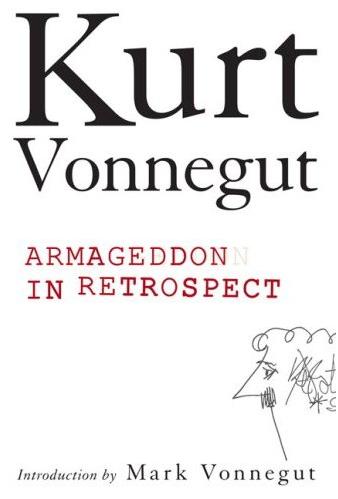 Book Two: Armageddon in Retrospect by Kurt Vonnegut. I didn't really enjoy this book as much as I thought that I would. All of the stories in this book are about his war experiences, or inspired by them. However the best part of this book is a speech that Kurt wrote but was unable to present because he died prior to the presentation and his son gave it instead to a huge audience full of his adoring fans. It pleased me very much and I read it over and over in between reading the other stories. Ugh, it was so good! There was this really good story about what foods the soldiers would eat when they finally came back home from war, but no others really stuck out to me that much.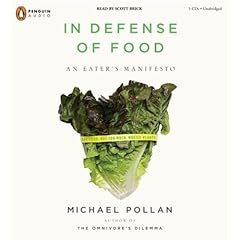
Book Three: In Defense of Food: An Eater's Manifesto by Michael Pollan. I haven't read any of Pollan's other books, but I get the feeling that a lot of his books have repeated knowledge, much like reading The Food Revolution by John Robbins and also The Ethics of What We Eat by Peter Singer, and also The Revolution Will Not Be Microwaved by... oh I can't remember, but reading all these books involved a lot of overlapping, even though I read them over the course of about 5 years, there wasn't too much new knowledge within them. I was really surprised by this book, because there was a lot of stuff I haven't read anywhere before, such as the confusion between real and fake foods, "low fat" and "low carb" foods and how they're not really real foods at all, mostly fillers. In the last chapter, Pollan offered a set of guidelines for people to follow in order to eat the most real food possible in a grocery story full of imitations. Some of the guidelines he provides: "Avoid any food that makes a health claim, it's probably not a real food if it does." "You are what you eat eats too." "Don't get your fuel from the same place you car does." "Avoid anything that can't rot, anything you can't pronounce." But right, I was really pleased by this book, it was even better to be able to discuss the book with my friend who read The Omnivore's Dilemma, also by Pollan.
Thursday, January 7, 2010
Disappointment!
So as the founder of this blog I greatly failed, though not in the way I would have imagined. While I someone managed to get through well over my desired number of books, I failed to make very many blog posts at all! So this year, I will read many books and make many blog posts. 200whine is over! 2010 here we come.
1st Book: The Brief Wondrous Life of Oscar Wao
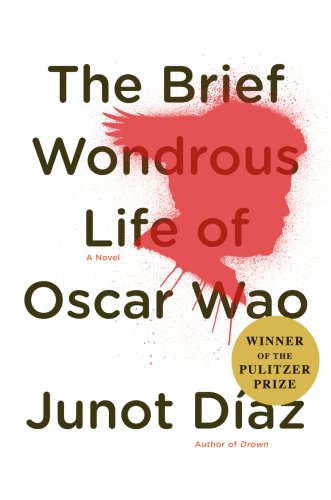
This book -like my year- was both dynamic and a little bit of a let-down. Diaz does a very wonderful job of creating a narrator with an incredible personality, coming through in dialogue, dialect, footnotes etc. Unfortunately the whole thing is a bit bogged down by pop culture reference, almost as if I was reading Chuck Klosterman. Star Trek this and Anime that, as someone who is a dork I felt that would be right up my alley, but only so many Mordor references can be stomached before a story becomes difficult to find in all the mush. One huge plus was the immersion in Dominican history, and learning a great deal about the horrors of Trujillo Era Dominican Republic. He manages -through the weaving of separate time lines of a single families story- to demonstrate exactly the type of longstanding affects that tyranny can have on a family. I always feel weird with spoilers etc, when doing this, but the books ending is so good it nearly redeems all the things that made it a bit tiresome at times. All in all, I would consider reading Diaz again, but probably not this particular novel.
1st Book: The Brief Wondrous Life of Oscar Wao
This book -like my year- was both dynamic and a little bit of a let-down. Diaz does a very wonderful job of creating a narrator with an incredible personality, coming through in dialogue, dialect, footnotes etc. Unfortunately the whole thing is a bit bogged down by pop culture reference, almost as if I was reading Chuck Klosterman. Star Trek this and Anime that, as someone who is a dork I felt that would be right up my alley, but only so many Mordor references can be stomached before a story becomes difficult to find in all the mush. One huge plus was the immersion in Dominican history, and learning a great deal about the horrors of Trujillo Era Dominican Republic. He manages -through the weaving of separate time lines of a single families story- to demonstrate exactly the type of longstanding affects that tyranny can have on a family. I always feel weird with spoilers etc, when doing this, but the books ending is so good it nearly redeems all the things that made it a bit tiresome at times. All in all, I would consider reading Diaz again, but probably not this particular novel.
[Lindsay 3] The Lost World by Michael Crichton
 Michael Crichton has been one of my favorite authors for only a couple of years now, but I've been trying in that time to slowly work my way through all his novels. This book is the second part of the Jurassic Park story, and it's the only sequel Crichton ever wrote. It takes place six years after the events of JP, with mathematician Ian Malcolm as the main protagonist. He and Lewis Dodgson, the unscrupulous researcher from the Biosyn company, are the only two characters from JP to make an appearance in the sequel. The primary action of the plot takes place on Isla Sorna, an island near Costa Rica that InGen had been using as part of their dinosaur breeding program. Malcolm and his team end up there initially to rescue Richard Levine, a fellow-researcher-friend of Malcolm's who goes to the island out of curiosity after he is exposed to a strange creature on a beach in Costa Rica. Dodgson and his team arrive later to steal dinosaur eggs and by doing so fulfill the goal of stealing InGen's research that Dodgson was working toward in JP. Conflicts between the two different groups and, of course, between dinosaurs ensue.
I enjoyed the book, but overall didn't find it quite as exciting as JP, despite the abundance of action scenes. The overall sense of danger and impending doom that runs throughout JP is greatly reduced in The Lost World, so even though I was hooked on the story, it was more out of curiosity about the history of the InGen project than out of interest in what was presently happening to the characters. Even the dinosaurs are less interesting, and the whole scope of the plot and setting is a lot narrower than JP.
While the main theme of JP revolves around the dangers of playing God and creation, LW focuses more on adaptation and extinction. Like in JP, Crichton uses Chaos Theory as a plotting device, but I felt much more intrigued by the concept as a whole and its connection to plot in JP. Theme and plot don't actually tie together as well in LW, so a lot of the time during my reading, I was wondering why the extinction idea was all that important to the direct events of the story or to the development of any of the characters. In JP, this is a critical connection that is much better executed.
The Lost World isn't a bad book by any means, though. The action is good, the science is interesting, and it gives more of a glimpse into the world created in Jurassic Park. Despite being a sequel that isn't quite as strong as its original source material, it's still worth a read.
Tuesday, January 5, 2010
[Lindsay 2] The Color Purple by Alice Walker
 I'd been meaning to read this book for a long time, mostly because it's one of the "classics" of literature that I had absolutely no previous understanding of, and was therefore very curious about. I was pleasantly surprised when I finally started it. The main plot of the novel revolves around the personal journey of an African American girl living in the South in the early decades of the twentieth century, and how she takes control of her life throughout adulthood. It's an epistolary novel, and a majority of the letters are written by Celie, the main protagonist. At first her letters are to God. She tells about her life as it happens, starting when she is fourteen and raped on various occasions by her father, who gives her away to a man she doesn't know to marry. The novel continues throughout many years of her life, as she grows older and comes into contact with different people who help her to mature, and appreciate and participate in life more fully.
The other major plotline of the novel is the exchange of letters between Celie and her sister Nettie, who writes while on a missionary trip to Africa. Nettie seems to be more educated than Celie (as evidenced by the differences in their writing), and ends up on a completely different continent for much of the story, but they face many of the same problems. Both deal with white racism, Celie in America and Nettie from English business owners who are taking over the lands of the native tribes in Africa for rubber production. Both women also deal with sexism, Celie more in the form of male dominance over her own self, and Nettie as an advocate for the girls in the village to receive an education and to not have to go through female genital mutilation. The sisters also both end up coming to an understanding of God from a more pantheistic sense, discarding their understanding of God as a white male form. This helps Celie in particular as she begins to come into her own and make decisions about her life that don't necessarily involve men of any color.
Overall, the growth of Celie and some of the other primary characters made this a really satisfying literary experience, and I'm glad I finally got around to reading it.
Monday, January 4, 2010
[Lindsay 1] Stormqueen! by Marion Zimmer Bradley
So my initial plan was to not participate in this blog again this year, since I achieved the 52 books goal of last year and wasn't sure I wanted to bother trying again. I started my own blog just to track what I'm reading, but that's getting lonely, so I'm gonna just post on both for a while.
My first finished book of the year is actually a re-read. I think I was in high school when I first read this book, but hadn't picked it up since. Marion Zimmer Bradley is by far one of my favorite sci-fi/fantasy authors, and this book, the second (chronologically) in her Darkover series, is definitely one of her better works. It and the others in the series take place on the planet Darkover, which was settled by Earthlings 1,000 years prior to the events of this story (but in the future from now) after their spaceship crashed and they were stranded there. (This story is told in Darkover Landfall.) Most people on the planet have some sort of psychic power, whether it's telepathy, the ability to see the future, power to read/control the weather, etc., and different family lines have their particular powers. Society is based around the feudal system.
Stormqueen! focuses on Dorilys Aldaran, an eleven-year-old girl who has a dangerous form of laran (psychic power) in which she causes violent storms and can kill others during periods of emotional stress. It takes place during the Ages of Chaos, when marriages were arranged for the sole purpose of breeding very specific types of laran and forming alliances and power shifts between families. Dorilys' unfortunate power is a result of this purposeful breeding, and it's possible that she won't survive to adulthood because of it.
The other important characters are Donal, Dorilys' half-brother; Renata, the woman who takes charge of Dorilys to help her control her laran; Allart Hastur, a former monk who is forced to leave the monstary in order to fulfill his obligations to his family; Cassandra, the woman who Allart is forced to marry against his will; and Dom-Rafael, Allart's older brother who poses a threat not only to Allart's happiness, but also to the well-being of the entire planet. All the different character threads intertwine with one another, and it makes for a really well-rounded and fascinating story. Some of the main themes and motifs that come up throughout the book are gender roles, family vs. self, power struggles (between individuals and families), and love in its various forms.
My main problem with MZB is that her writing is sometimes very repetitive, and all her characters have pretty much the same exact voice. Despite these minor drawbacks, the detail and scope of the world she created in Darkover is plenty to keep me reading, and I hope that this and the other Darkover novels remain favorites of mine for years to come.
My first finished book of the year is actually a re-read. I think I was in high school when I first read this book, but hadn't picked it up since. Marion Zimmer Bradley is by far one of my
 favorite sci-fi/fantasy authors, and this book, the second (chronologically) in her Darkover series, is definitely one of her better works. It and the others in the series take place on the planet Darkover, which was settled by Earthlings 1,000 years prior to the events of this story (but in the future from now) after their spaceship crashed and they were stranded there. (This story is told in Darkover Landfall.) Most people on the planet have some sort of psychic power, whether it's telepathy, the ability to see the future, power to read/control the weather, etc., and different family lines have their particular powers. Society is based around the feudal system.
Stormqueen! focuses on Dorilys Aldaran, an eleven-year-old girl who has a dangerous form of laran (psychic power) in which she causes violent storms and can kill others during periods of emotional stress. It takes place during the Ages of Chaos, when marriages were arranged for the sole purpose of breeding very specific types of laran and forming alliances and power shifts between families. Dorilys' unfortunate power is a result of this purposeful breeding, and it's possible that she won't survive to adulthood because of it.
The other important characters are Donal, Dorilys' half-brother; Renata, the woman who takes charge of Dorilys to help her control her laran; Allart Hastur, a former monk who is forced to leave the monstary in order to fulfill his obligations to his family; Cassandra, the woman who Allart is forced to marry against his will; and Dom-Rafael, Allart's older brother who poses a threat not only to Allart's happiness, but also to the well-being of the entire planet. All the different character threads intertwine with one another, and it makes for a really well-rounded and fascinating story. Some of the main themes and motifs that come up throughout the book are gender roles, family vs. self, power struggles (between individuals and families), and love in its various forms.
My main problem with MZB is that her writing is sometimes very repetitive, and all her characters have pretty much the same exact voice. Despite these minor drawbacks, the detail and scope of the world she created in Darkover is plenty to keep me reading, and I hope that this and the other Darkover novels remain favorites of mine for years to come.
Wednesday, December 30, 2009
{Lindsay} Final Books of '09 54-72
I'm super lazy and don't feel like doing write-ups for all my final books. Here's a list:
Books I read for Young Adult Lit (I wasn't gonna count books for school, but it seems other people are so whatever):
The Absolutely True Diary of a Part-Time Indian by Sherman Alexie
Slam by Nick Hornby
The Secret of Me: A Novel in Poems by Meg Kearney
Paranoid Park by Blake Nelson
The Curious Incident of the Dog in the Night-Time by Mark Haddon
Last Chance for First by Tom Hazuka
Lowboy by John Wray
Sophie's World by Jostein Gaarder
Monster by Walter Dean Myers
Final out-of-school reading:
My Rotten Life (Nathan Abercrombie, Accidental Zombie) by David Lubar
The Selected Poems of D.H. Lawrence
The Diaries of Adam and Eve by Mark Twain
Diary of a Wimpy Kid by Jeff Kinney
Sense and Sensibility by Jane Austen
2041: Twelve Short Stories About the Future edited by Jane Yolen
A Day No Pigs Would Die by Robert Newton Peck
The Wave by Todd Strasser
The Last Battle by C.S. Lewis
A Christmas Carol and Other Holiday Tales by Charles Dickens
Overall a good year for reading. I may start my own blog to track what I'm reading in 2010. We'll see!
Books I read for Young Adult Lit (I wasn't gonna count books for school, but it seems other people are so whatever):
The Absolutely True Diary of a Part-Time Indian by Sherman Alexie
Slam by Nick Hornby
The Secret of Me: A Novel in Poems by Meg Kearney
Paranoid Park by Blake Nelson
The Curious Incident of the Dog in the Night-Time by Mark Haddon
Last Chance for First by Tom Hazuka
Lowboy by John Wray
Sophie's World by Jostein Gaarder
Monster by Walter Dean Myers
Final out-of-school reading:
My Rotten Life (Nathan Abercrombie, Accidental Zombie) by David Lubar
The Selected Poems of D.H. Lawrence
The Diaries of Adam and Eve by Mark Twain
Diary of a Wimpy Kid by Jeff Kinney
Sense and Sensibility by Jane Austen
2041: Twelve Short Stories About the Future edited by Jane Yolen
A Day No Pigs Would Die by Robert Newton Peck
The Wave by Todd Strasser
The Last Battle by C.S. Lewis
A Christmas Carol and Other Holiday Tales by Charles Dickens
Overall a good year for reading. I may start my own blog to track what I'm reading in 2010. We'll see!
Sunday, November 22, 2009
{Lindsay} 47-53
Still not much reading cause school is still kicking my butt. I did manage to get through the goal for the year, though a lot of them were fairly short near the end. I'm sure I'll be squeezing in a few more once I'm on winter break and have the two remaining weeks of the year free.
Before Halloween, I bought and read Alvin Schwartz's Scary Stories Boxed Set. If you don't know what that is, you were obviously deprived as a child.
Next was the first book in a new series called The Sisters Grimm. Book 1 is The Fairy Tale Detectives. Kids' lit of the fractured fairy tale variety, which is a double whammy of great in my book. I have the second and third books in the series, and I can't wait to read them.
After that I ventured back to Narnia. I read The Lion, the Witch, and the Wardrobe, Prince Caspian, The Voyage of the Dawn Treader, and The Silver Chair. These four form the most cohesive narrative out of all the books, so reading them and skipping the ones that don't quite fit made for a much better reading experience this time through them. I still have The Last Battle to get through, then two other ones in the series that don't go into that overall story arc. I did some research on each of the books as I was reading them and tried to get a sense of what Lewis was trying to accomplish with each one. I think that gave me a much better appreciation of the books than I previously had, and I'd like to do more research into Lewis and Narnia at some point.
Finally for this batch was Aesop's Fables. I'd been meaning to read these forever but never have until now. I don't really have an opinion on them either way, but I feel like they're literary classics that deserve at least one read through. I feel like they might also be a useful teaching tool for vocabulary, grammar, and introductory analytical activities, so maybe someday I'll get to use them in the classroom.
Not too many for this time, but I guess I'm officially done. I'll still be reading till the end of the year, though, so I'm sure you'll be hearing from me at least once more.
Before Halloween, I bought and read Alvin Schwartz's Scary Stories Boxed Set. If you don't know what that is, you were obviously deprived as a child.
Next was the first book in a new series called The Sisters Grimm. Book 1 is The Fairy Tale Detectives. Kids' lit of the fractured fairy tale variety, which is a double whammy of great in my book. I have the second and third books in the series, and I can't wait to read them.
After that I ventured back to Narnia. I read The Lion, the Witch, and the Wardrobe, Prince Caspian, The Voyage of the Dawn Treader, and The Silver Chair. These four form the most cohesive narrative out of all the books, so reading them and skipping the ones that don't quite fit made for a much better reading experience this time through them. I still have The Last Battle to get through, then two other ones in the series that don't go into that overall story arc. I did some research on each of the books as I was reading them and tried to get a sense of what Lewis was trying to accomplish with each one. I think that gave me a much better appreciation of the books than I previously had, and I'd like to do more research into Lewis and Narnia at some point.
Finally for this batch was Aesop's Fables. I'd been meaning to read these forever but never have until now. I don't really have an opinion on them either way, but I feel like they're literary classics that deserve at least one read through. I feel like they might also be a useful teaching tool for vocabulary, grammar, and introductory analytical activities, so maybe someday I'll get to use them in the classroom.
Not too many for this time, but I guess I'm officially done. I'll still be reading till the end of the year, though, so I'm sure you'll be hearing from me at least once more.
Sunday, October 11, 2009
Books 31-39
So, I have several more books to add to the list. Here we go!
31. Haruki Murakami - The Wind Up Bird Chronicle
32. Hakim Bey - Immediatism
33. Hakim Bey - Temporary Autonomous Zones
34. Jeff Smith - 'Bone' books 4 and 5
35. 'Swamp Thing' book 3
36. 'Swamp Thing' book 4
37. 'Swamp Thing' book 5
38. Sophocles - Oedipus Rex
39. Sophocles - Antigone
So, the Sophocles plays and the two Hakim Bey books are both re-reads for me. In the Greek tragedy case, it was for my final English class before I graduate, which is thankfully a better class than that shit I took over the summer. Hakim Bey is just a great political author who writes about anarchist and autonomous concepts in an interesting, albeit crazy, way. He's sort of like the situationists if they believed in magic and middle-eastern spiritualism, or something along those lines. I don't know how to describe it any more fairly, so I apologize. If it's a subject you're interested in, you should just give these two books a read. They're both incredibly short and filled from beginning to end with enthralling writing.
I read Wind Up Bird Chronicle knowing that it is one of Murakami's more famous books, and also that it delves more into his magical realism territories than my previous read of his did. However, I loved Norwegian Wood, and I was hopeful that the writing in this book would be as good as that, even if the subject matter changed. I'm glad to say that this book was equally as enjoyable, though much longer, and it was something I was actually excited to read.
Bone is a 9 book graphic novel series that was originally published as comics in the early 90s. I've been reading it off and on for a while now, but I'm trying to get around to finishing it this semester, along with Swamp Thing. Swamp Thing also has 9 compiled books of older comics, I believe, though Alan Moore was only on board for enough comics to fill the first 6 books. Still, the writing, art, and story in general is phenomenal, and it's another series I'm excited to finish. Books 3-5 have some more great political allegories, and also delve into more supernatural realms, and craft Swamp Thing into a more super-powered super hero. Read it, it rules.
31. Haruki Murakami - The Wind Up Bird Chronicle
32. Hakim Bey - Immediatism
33. Hakim Bey - Temporary Autonomous Zones
34. Jeff Smith - 'Bone' books 4 and 5
35. 'Swamp Thing' book 3
36. 'Swamp Thing' book 4
37. 'Swamp Thing' book 5
38. Sophocles - Oedipus Rex
39. Sophocles - Antigone
So, the Sophocles plays and the two Hakim Bey books are both re-reads for me. In the Greek tragedy case, it was for my final English class before I graduate, which is thankfully a better class than that shit I took over the summer. Hakim Bey is just a great political author who writes about anarchist and autonomous concepts in an interesting, albeit crazy, way. He's sort of like the situationists if they believed in magic and middle-eastern spiritualism, or something along those lines. I don't know how to describe it any more fairly, so I apologize. If it's a subject you're interested in, you should just give these two books a read. They're both incredibly short and filled from beginning to end with enthralling writing.
I read Wind Up Bird Chronicle knowing that it is one of Murakami's more famous books, and also that it delves more into his magical realism territories than my previous read of his did. However, I loved Norwegian Wood, and I was hopeful that the writing in this book would be as good as that, even if the subject matter changed. I'm glad to say that this book was equally as enjoyable, though much longer, and it was something I was actually excited to read.
Bone is a 9 book graphic novel series that was originally published as comics in the early 90s. I've been reading it off and on for a while now, but I'm trying to get around to finishing it this semester, along with Swamp Thing. Swamp Thing also has 9 compiled books of older comics, I believe, though Alan Moore was only on board for enough comics to fill the first 6 books. Still, the writing, art, and story in general is phenomenal, and it's another series I'm excited to finish. Books 3-5 have some more great political allegories, and also delve into more supernatural realms, and craft Swamp Thing into a more super-powered super hero. Read it, it rules.
Monday, September 28, 2009
{Lindsay} 41-46
School starting = reading slowing. No pictures for this post cause I don't have time!
First for this batch was The Feminine Mystique by Betty Friedan, pretty much a classic of feminist literature. I was surprised because this book is based on a series of interviews with women Betty did in the middle part of the 20th century, rather than the typical personal experience approach that most of the feminist lit I've been reading takes. Basically, she examines women's fulfillment in housewife roles, how that feeling of fulfillment changed from generation to generation, and explores how marketing and outside (i.e. men's) definition of the role of women in the household made women believe that the role of the housewife is and should be fulfilling for all women. It was written in the 60s, so obviously it's a bit dated, but I definitely found it an interesting read.
Next was The Egypt Game by Zilpha Keatley Snyder, a book my dad used to read to me as a kid. I'm taking a class on Young Adult Literature this semester, so my pleasure reading is definitely going to involve a lot more of that and kid's lit. I really didn't remember many of the details in the book, but while reading it I definitely felt a sense of calming familiarity. I don't know if that was the book itself, or the whole idea of playing make-believe that drives the plot. Either way, it definitely brought me back to someplace from my childhood, so I'm glad I decided to read it again after all these years.
Recently I read Craig Ferguson's memoir, American on Purpose. I'm a big fan of Craig in general, and I loved his novel, so I was pretty psyched for this to come out. I was slightly let down, though, because the book kind of rambles along, and he focuses on really minute details where it might have been better to just paint a broader picture. Regardless, as a fan, I enjoyed some of the anecdotes and occasional laugh-out-loud moments of the book.
Yesterday I finished Phillip Pullman's His Dark Materials trilogy for the second time. I debated counting it, since it's technically for class, but I'm reading it for my final paper, and I got to choose what I wanted to write my final paper on, and all the other choices didn't include reading any novels, so I'm gonna go ahead and give myself some extra reading credit for this one. Basically, if you haven't read this trilogy (The Golden Compass, The Subtle Knife, The Amber Spyglass), you are missing out something fierce on a fascinating take on religion, growing up, and Original Sin. I feel like saying anything more will completely fail to do these books justice, so do yourselves a favor and read them. Read Paradise Lost while you're at it, as well, since the trilogy is based primarily off that.
I've currently got a few other books in rotation, but who knows when I'll have time to get all the way through them. Only technically need six more, though, so I'm not really in any rush!
First for this batch was The Feminine Mystique by Betty Friedan, pretty much a classic of feminist literature. I was surprised because this book is based on a series of interviews with women Betty did in the middle part of the 20th century, rather than the typical personal experience approach that most of the feminist lit I've been reading takes. Basically, she examines women's fulfillment in housewife roles, how that feeling of fulfillment changed from generation to generation, and explores how marketing and outside (i.e. men's) definition of the role of women in the household made women believe that the role of the housewife is and should be fulfilling for all women. It was written in the 60s, so obviously it's a bit dated, but I definitely found it an interesting read.
Next was The Egypt Game by Zilpha Keatley Snyder, a book my dad used to read to me as a kid. I'm taking a class on Young Adult Literature this semester, so my pleasure reading is definitely going to involve a lot more of that and kid's lit. I really didn't remember many of the details in the book, but while reading it I definitely felt a sense of calming familiarity. I don't know if that was the book itself, or the whole idea of playing make-believe that drives the plot. Either way, it definitely brought me back to someplace from my childhood, so I'm glad I decided to read it again after all these years.
Recently I read Craig Ferguson's memoir, American on Purpose. I'm a big fan of Craig in general, and I loved his novel, so I was pretty psyched for this to come out. I was slightly let down, though, because the book kind of rambles along, and he focuses on really minute details where it might have been better to just paint a broader picture. Regardless, as a fan, I enjoyed some of the anecdotes and occasional laugh-out-loud moments of the book.
Yesterday I finished Phillip Pullman's His Dark Materials trilogy for the second time. I debated counting it, since it's technically for class, but I'm reading it for my final paper, and I got to choose what I wanted to write my final paper on, and all the other choices didn't include reading any novels, so I'm gonna go ahead and give myself some extra reading credit for this one. Basically, if you haven't read this trilogy (The Golden Compass, The Subtle Knife, The Amber Spyglass), you are missing out something fierce on a fascinating take on religion, growing up, and Original Sin. I feel like saying anything more will completely fail to do these books justice, so do yourselves a favor and read them. Read Paradise Lost while you're at it, as well, since the trilogy is based primarily off that.
I've currently got a few other books in rotation, but who knows when I'll have time to get all the way through them. Only technically need six more, though, so I'm not really in any rush!
Wednesday, September 2, 2009
Books 28-30
 Well the last three books have been a bit weird, or maybe not that weird at all. I finished Love In The Time Of Cholera, and Swamp Thing books 1 and 2.
Love In The Time Of Cholera was a wonderful story, but there's some confusing elements in describing reading it, this is a kind of hard response to write. The way it portrays love is simultaneously wonderful and depressing. The character toils away for years loving the same person with all of their heart, and everything about the love makes you feel hopeful and like dying.
To be fair, I have been rating some graphic
 novels as full books, while as others I have been counting as batches of books. In this case, Alan Moore's writing in his run on Swamp Thing is a bit heavier than Jeff Smith's writing in Bone. This is not to say anything poorly of the Bone stories, or any other comics I read that I counted as less than a full book, it just takes me roughly the same amount of time to read three Walking Dead books as it does to read anything else.
The first book of Swamp Thing is pretty classic as far as Swamp Thing stories go, it reestablishes the character after a long hiatus from publication, and still manages to introduce new characters and concepts, and exciting events. I am giving this book a shorter review to focus on the second one, but that's not to speak poorly of book one, clearly it gripped me enough to go out and buy and read the second book. Book one's events are familiar from the outset, even though I never read the original 17 issues from the 70s that technically precede it. With the exception of one event in the last chapter, everything in the story felt familiar and welcoming, or as welcoming as a horror/sci-fi comic book can feel, I suppose.
 However, it's really in book two of Alan Moore's run that things hit their stride. The bulk of the stories within take place on a literal journey through Moore's interpretations of Purgatory, Heaven, and Hell, complete with different spiritual guides in each realm to aid Swamp Thing in his search of his loved one. These parts of the stories are where it earns its reputation as a horror story and a story for mature readers. Shit hits the fan pretty hard early on in the story and it doesn't really let up until the last chapter. Incidentally, in addition to going on a journey through the afterlife, the second book finds time to go over putting some finality on older storylines, establishing a deeper new history for Swamp Thing, and going on a hallucinogenic freak out love-song/love-scene. The third to last chapter is a tribute to an older comic, Pogo Possum, that is brilliant, sad, touching, and probably the most misanthropic thing DC ever printed. If you're aware of Pogo Possum (which you should be, really) the references are great, and clearly written with care by a devoted fan of those stories, who is not just giving adorations, but looking to leave his own mark on what he considers one of the greats. However, what makes this tribute even more wonderful, is even if you went into it with absolutely no knowledge of the comic he is referencing, the horror and sadness are still just as real, and the political points still strike just as harshly. As obvious as the surprise in this chapter is in retrospect, when it happened in the comic, I was genuinely shocked and dismayed. The emotional depth in these comics is perfect, and the great art only helps to make this more striking. This is easily my most recommended comic of the year, including all the Bone stories, including Maggots, Walking Dead, Capacity, and some of the shorter fun things I've read to fill the time.
Really, look at this shit, it's amazing:
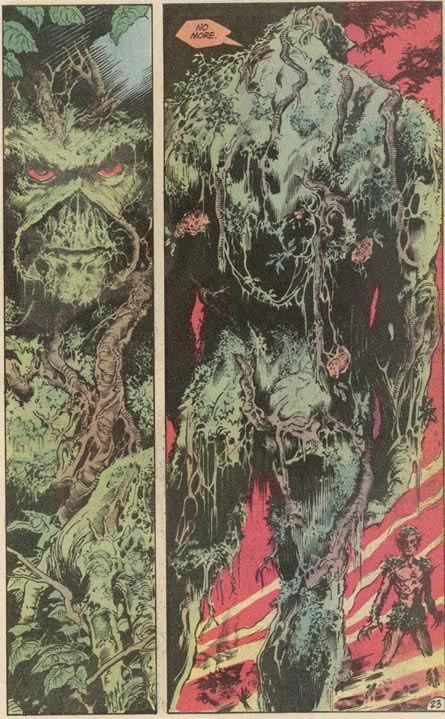
Tuesday, August 25, 2009
Books 18 - 24
The last seven books I've read have been all seven Harry Potter books. I feel it's not necessary to list the titles! 1-6 were rereads, but 7 was basically the first time I've read through it, because I only read about 100 pages of it when it came out and had to stop to finish up my summer reading. I sort of dreaded reading it, and spread it out over like 4 days, when I could have easily finished it in one or two. I'm feeling slightly upset that I've finished them all for good, but ah well time to move onto other things!
I do suppose it was good for me to reread all of them as they've helped my book count tremendously, but when I start school in less than a week, I'll go back to reading two books a month, oof. Short entry, whatever!
I do suppose it was good for me to reread all of them as they've helped my book count tremendously, but when I start school in less than a week, I'll go back to reading two books a month, oof. Short entry, whatever!
Friday, August 21, 2009
{Lindsay} 31-40
Moving right along! I love reading binges.
I read some more S hakespeare, this time in the form of Titus Andronicus. Apparently this is Shakespeare's critically worst play, but I enjoyed it. Pretty violent plot driven by vengeance, which I tend to love, so purely from an entertainment angle, I was satisfied with it. Unfortunately I really need the assistance of SparkNotes to help me get past an appreciation of the Bard based purely on entertainment, but whatever. Thanks, Lit degree! Here's hoping I don't fail miserably as an English teacher...
Next were a couple VERY different feminist works. One was called Cunt: A Declaration of Independence, by Inga Muscio. I'll admit, I picked up this book solely because of the title, but what this book seemed to be about was what made me buy it. What I THOUGHT I was gonna read was a long, detailed history of the word "cunt" and how it's meaning and connotations have changed over the course of its history. This was how the book seemed to be marketed, since that was mostly what the little back-cover blurb focused on. Since this is one of my favorite words in any language, and since I'm a whore for language in general, obviously I thought this was going to be a great read. Unfortunately, the marketing and reality of the content of the book didn't quite pair up. Even after reading it, I'm not sure I could give an adequate description of the overall point this author is trying to make. The word origin section is the shortest section in the book, and it's completely lacking in concrete details. The rest of the book lacks clear flow, cohesion, and and has the worst editing I have ever seen in a widely-published work, with the most awkward line breaks I have ever seen in anything. This woman is a SUPER feminist, who takes the stance that men aren't needed for anything and that women should just let their period blood flow down their legs every month. I also had a hard time
  reconciling her stance against birth control with her detailed descriptions of how horrible two of her three abortions were. I don't necessarily fault her as a person for that, but it's not quite the same path of girl-power I myself tread. Overall I found this book completely alienating, both in content and presentation. I enjoyed Jessica Valenti's Full-Frontal Feminism a lot more. She's a bit younger, appreciates the presence of men in her life, and overall just seems to take a much more balanced view on the whole feminism thing. I really enjoy her writing style, and find myself agreeing with a lot of what she has to say.
Next was No Plot? No Problem! by Chris Baty. I'd been meaning to get this book for awhil e, but never felt like paying $15 for it (it's a fairly small volume), but luckily I found it at a book discount warehouse for a third of the retail price. Baty is the creator of National Novel Writing Month (NaNoWriMo), which takes place every November. Basically you have a month to write a super shitty first draft of a 50,000 word novel. This book is full of tips and support to get through the month and keep your ideas and word count going. I've tried to participate a few years, but never end up getting very far. I'm hoping to finally bite the bullet this year and actually let myself write horrible prose simply for the sake of doing it.
After that was some children's/young adult fiction. First was Pippi Longstocking, which I almost feel bad for counting because it's SO short. That's okay, though. I'll just have to read a 53rd book to make up for it. Despite it being somewhat of a classic, I'd never read it before. I did, however, enjoy the movie when I was little. I thought it was okay. I don't know that I'd care to read it again any time soon, but I guess it was enjoyable.
I continued with something a bit longer: A Wrinkle In Time by Madeleine L'Engle. This is another classic I'd never read until now, and I definitely enjoyed this one more than Pippi. I really had no idea what to expect going into it, and my first read through of it was a bit frustrating because I had no idea what sort of characters and situations were about to be encountered along the way. Interestingly, at the same time I felt the very end chapters lacked any real tension in terms of plot, but maybe that doesn't necessarily hold true for younger readers. Either way, a good read, and I might be interested to read the rest of the books in the series.
Next was The Tale of Despereaux by Kate Dicamillo, which I think is my favorite of this bunch. The plot constr uction of this book is great, because it focuses mostly around character introductions. In the course of these introductions, a little bit of the plot is set in motion, but before it goes too far, the next character gets introduced, and then the plot involving that character ends up tying in with the plot bits of the character prior. This makes you really want to keep reading. The writing itself is really great, and the book is full of universal themes and truths, so it's also very emotionally fulfilling.
Finally, an omnibus of three Michael Crichton novels, The And romeda Strain, The Terminal Man, and The Great Train Robbery. I'd been trying to get through this collection for weeks, so I'm glad to finally just have it out of the way. I've come to realize that I really don't even care about plot when it comes to Crichton, because all the science and technology and random facts he throws into his stories are so freaking interesting. I'm fairly certain I would be entertained reading anything by him.
I read some more S
 hakespeare, this time in the form of Titus Andronicus. Apparently this is Shakespeare's critically worst play, but I enjoyed it. Pretty violent plot driven by vengeance, which I tend to love, so purely from an entertainment angle, I was satisfied with it. Unfortunately I really need the assistance of SparkNotes to help me get past an appreciation of the Bard based purely on entertainment, but whatever. Thanks, Lit degree! Here's hoping I don't fail miserably as an English teacher...
Next were a couple VERY different feminist works. One was called Cunt: A Declaration of Independence, by Inga Muscio. I'll admit, I picked up this book solely because of the title, but what this book seemed to be about was what made
 me buy it. What I THOUGHT I was gonna read was a long, detailed history of the word "cunt" and how it's meaning and connotations have changed over the course of its history. This was how the book seemed to be marketed, since that was mostly what the little back-cover blurb focused on. Since this is one of my favorite words in any language, and since I'm a whore for language in general, obviously I thought this was going to be a great read. Unfortunately, the marketing and reality of the content of the book didn't quite pair up. Even after reading it, I'm not sure I could give an adequate description of the overall point this author is trying to make. The word origin section is the shortest section in the book, and it's completely lacking in concrete details. The rest of the book lacks clear flow, cohesion, and and has the worst editing I have ever seen in a widely-published work, with the most awkward line breaks I have ever seen in anything. This woman is a SUPER feminist, who takes the stance that men aren't needed for anything and that women should just let their period blood flow down their legs every month. I also had a hard time
  reconciling her stance against birth control with her detailed descriptions of how horrible two of her three abortions were. I don't necessarily fault her as a person for that, but it's not quite the same path of girl-power I myself tread. Overall I found this book completely alienating, both in content and presentation. I enjoyed Jessica Valenti's Full-Frontal Feminism a lot more. She's a bit younger, appreciates the presence of men in her life, and overall just seems to take a much more balanced view on the whole feminism thing. I really enjoy her writing style, and find myself agreeing with a lot of what she has to say.
Next was No Plot? No Problem! by Chris Baty. I'd been meaning to get this book for awhil
 e, but never felt like paying $15 for it (it's a fairly small volume), but luckily I found it at a book discount warehouse for a third of the retail price. Baty is the creator of National Novel Writing Month (NaNoWriMo), which takes place every November. Basically you have a month to write a super shitty first draft of a 50,000 word novel. This book is full of tips and support to get through the month and keep your ideas and word count going. I've tried to participate a few years, but never end up getting very far. I'm hoping to finally bite the bullet this year and actually let myself write horrible prose simply for the sake of doing it.
After that was some children's/young adult fiction. First was Pippi Longstocking,
 which I almost feel bad for counting because it's SO short. That's okay, though. I'll just have to read a 53rd book to make up for it. Despite it being somewhat of a classic, I'd never read it before. I did, however, enjoy the movie when I was little. I thought it was okay. I don't know that I'd care to read it again any time soon, but I guess it was enjoyable.
I continued with something a bit longer: A Wrinkle In Time by
 Madeleine L'Engle. This is another classic I'd never read until now, and I definitely enjoyed this one more than Pippi. I really had no idea what to expect going into it, and my first read through of it was a bit frustrating because I had no idea what sort of characters and situations were about to be encountered along the way. Interestingly, at the same time I felt the very end chapters lacked any real tension in terms of plot, but maybe that doesn't necessarily hold true for younger readers. Either way, a good read, and I might be interested to read the rest of the books in the series.
Next was The Tale of Despereaux by Kate Dicamillo, which I think is my favorite of this bunch. The plot constr
 uction of this book is great, because it focuses mostly around character introductions. In the course of these introductions, a little bit of the plot is set in motion, but before it goes too far, the next character gets introduced, and then the plot involving that character ends up tying in with the plot bits of the character prior. This makes you really want to keep reading. The writing itself is really great, and the book is full of universal themes and truths, so it's also very emotionally fulfilling.
Finally, an omnibus of three Michael Crichton novels, The And
 romeda Strain, The Terminal Man, and The Great Train Robbery. I'd been trying to get through this collection for weeks, so I'm glad to finally just have it out of the way. I've come to realize that I really don't even care about plot when it comes to Crichton, because all the science and technology and random facts he throws into his stories are so freaking interesting. I'm fairly certain I would be entertained reading anything by him.
Subscribe to:
Comments (Atom)